


Somnophilia 101: The Taboo Fantasy No One Admits
Sleep is one of the last places where a person is unavailable for performance. Even the most self-possessed people, the ones who know their angles and deliver tidy little versions of themselves all day, eventually disappear. Their face loosens. Their mouth falls slightly open. Their body stops editing itself. It’s oddly moving to witness, and maybe that’s the part people are often too embarrassed to say out loud.
The flat internet definition of somnophilia does nothing for me. It’s technically accurate in the way tax forms are technically accurate. It tells you the category, not the feeling. The feeling is stranger and more intimate. It lives in that eerie, tender moment when one person has slipped beyond social consciousness and the other remains awake, looking at them as they really are when no charm, wit, or sexual choreography is available.

That dynamic carries a charge because it bypasses the ego. So much of sex is negotiated through self-awareness. You’re managing expression, timing, desirability, embarrassment, power, the endless low-grade vanity of being perceived. Sleep interrupts all of that. The sleeping person is no longer curating anything. They are simply there: warm, absent, vulnerable, unknowable. For the person who stays awake, the appeal can have less to do with domination than with proximity to something unguarded. It can feel like being allowed behind a curtain no one else gets to touch.
That is also why the fantasy can be so psychologically loaded. Unconsciousness is not just passivity. It is defenselessness. To be asleep beside someone is to assume a level of safety most people reserve for infancy, illness, or very serious love. Which is partly why this territory feels so emotionally naked even when the fantasy itself is highly stylized. There is an eroticism in being witnessed without having to perform being desirable. There is also an eroticism in not witnessing at all, in surrendering so completely that your body is no longer participating in your image management.
I’ve always thought one of the darker little truths of adulthood is that most people want to be seen, but only selectively. We want to be understood, adored, maybe even exposed, but on aesthetic terms. We would like our chaos to look elegant and our vulnerability to arrive with flattering lighting. Sleep refuses all of that. A sleeping body is honest in a way waking life rarely permits. It drools. It twitches. It goes slack. It trusts, or it has made the terrible mistake of trusting. There’s no coquettish version of unconsciousness. That may be exactly what makes it so compelling.
When people speak about sleep play in a way that is thoughtful rather than porn-brained, what they often circle around is not conquest but suspension. The sleeping person is temporarily relieved of selfhood as performance. The waking person is invited into a role that is less predator than witness, less taker than custodian. At its most erotic, the fantasy turns on the feeling that access has been consciously granted before consciousness itself disappears. That distinction is not bureaucratic. It is the whole architecture. Without prior agreement, there is no intimacy here, only trespass with a nice vocabulary.

And that’s the part I find more interesting than the usual hand-wringing. Of course touching someone in their sleep without explicit prior consent is assault. That is not a gray area, and I’m not interested in pretending it is. What is interesting is what it means when someone does consent. What are they consenting to, exactly? Not just touch. Not just arousal. They may be consenting to being encountered outside the realm of self-presentation. They may be consenting to being loved, used, held, stirred, or simply observed while they are least defended. That is an enormous thing to place in another person’s hands.
The people who can hold that well tend to understand that desire alone is not a qualification. You do not earn access to someone’s unconscious body by wanting it intensely. You earn it by being the kind of person who can be trusted with asymmetry. By being precise. By not getting sloppy just because the fantasy feels dreamy. By being able to discuss details that are not glamorous but are, in fact, the entire point: what kind of touch is welcome, what kind isn’t, whether waking is part of the scene, whether being partially roused ruins it or completes it, what happens if the sleeping person startles, freezes, changes their mind later, or wakes with a feeling they can’t immediately explain.
If you need a framework for that conversation, our Kink Sheet: The Yes/No/Maybe Manifesto is useful precisely because it strips away romantic vagueness. And if your interest in CNC (Consensual Non Consent) and how to play with that, read our ultimate guide.
I think that’s why this fantasy has such a peculiar emotional aftertaste. It can be profoundly intimate, but only because the ethical stakes are so high. It asks whether you want to be seen when you are no longer managing the scene. It asks whether you can bear being the one who sees and does not exploit the privilege. It asks what remains of eroticism when self-consciousness exits the room.
Some people are drawn to the idea of being woken slowly by someone they already trust, entering pleasure from that soft borderland where the mind is still elsewhere. Others are drawn to the opposite position: staying awake and feeling the almost religious weight of being near someone who has handed over their defenselessness in advance. Both fantasies are really about the same thing, which is sanctioned access to the unperformed self. That’s rare. More than rare, actually. It’s luxurious. Not in a silk-sheets sense. In the sense that honesty this complete is almost never available between adults.
The shame people feel around this kink often comes from assuming that any fantasy involving sleep must be inherently monstrous. Sometimes that shame is a useful alarm. Sometimes it’s just moral panic flattening a complicated human desire into something easier to condemn than to examine. Wanting to be absent from your own erotic image does not make you broken. Wanting to be close to someone in a state where they cannot manufacture allure does not automatically make you predatory. But both positions require a level of integrity that fantasy alone does not test.
If this is something you want to bring into a real conversation, I’d avoid labels at first and talk instead about the actual sensation. Being woken gently. Drifting. Being touched in that half-conscious state. Being trusted near someone who is sleeping. Those details are more revealing than jargon anyway. They tell the truth of the desire without hiding behind a category. And if the answer is no, then it’s no. Not tragic, not a debate, not an invitation to workshop somebody else’s boundaries until they resemble your fantasy.
There are kinks that are exciting because they are loud, theatrical, immediately legible. This isn’t one of them. Its charge comes from stillness. From the eerie privacy of shared space. From the fact that one person has stepped out of the social contract temporarily and the other has been asked, in advance, to behave beautifully in the dark.

Why Does This Turn People On?
Here's where it gets psychologically juicy.
Dr. Justin Lehmiller's research on sexual fantasies suggests that taboo desires often stem from a complex cocktail of power dynamics, vulnerability, and the thrill of the forbidden. Somnophilia ticks all three boxes.
Power and control. Sleep places someone in their most defenseless state. For some, the fantasy offers a sense of dominance that feels impossible to achieve with an alert, responsive partner. It's not about harm, it's about the illusion of total access.
Performance anxiety escape. Here's a confession that came up repeatedly in anonymous surveys: some people fantasize about sleeping partners because it removes the pressure to perform. No expectations. No judgment. No awkward eye contact while you figure out what goes where.
Intimacy without resistance. For those with attachment issues or trauma histories, the fantasy can represent closeness without the terrifying vulnerability of being truly seen. It's intimacy on mute.
This doesn't mean everyone with this kink has deep psychological wounds. Sometimes a fantasy is just a fantasy. The brain is weird. Desire is weirder.
The Consent Conversation Nobody Wants to Have
Let's be brutally clear: fantasizing about somnophilia is not illegal. Acting on it without explicit prior consent is sexual assault. Full stop. No grey area. No "but we're married" loopholes.
In the U.S., U.K., Australia, and most of Europe, any sexual activity with an unconscious person who hasn't given prior informed consent is a crime. This isn't prudishness. It's basic human dignity.
But here's where kink communities actually get it right. The BDSM world has been navigating consent in power exchange dynamics for decades. And somnophilia, when practiced ethically, falls squarely into that territory.
How does consensual somnophilia work?
It requires explicit, sober, pre-negotiated agreements. Partners discuss boundaries in detail before anyone falls asleep. They establish safe words (or safe signals, since one person might be groggy). They check in afterward. They treat the whole thing like the high-stakes power exchange it is.
This is what separates ethical kink from assault: communication that happens before the scene, not during or after.
Confessions From the Dark Side
We reached out to people willing to share their experiences anonymously. The responses were raw, vulnerable, and surprisingly common.
"I've had this fantasy since I was a teenager and I've never told anyone. Not my therapist. Not my partners. I thought it meant something was fundamentally broken in me. Reading that it has a name, that other people feel this, made me cry." , Anonymous, 34
"My partner and I have a standing agreement. Some nights, I give blanket consent for him to initiate while I'm asleep. Waking up mid-act is genuinely one of the hottest experiences of my life. But we talked about it for months before trying it. We have check-ins. It's not reckless, it's intentional." , Anonymous, 29
"I'm on the other side. I want to be the one asleep. There's something about surrendering that completely, trusting someone with your unconscious body, that feels like the ultimate intimacy. But finding a partner I trust enough? That's the hard part." , Anonymous, 41
These aren't stories of predators. They're stories of people navigating desire with honesty and care.
Is This a Mental Health Issue?
Clinically speaking, somnophilia only qualifies as a disorder when it causes significant distress or leads to harmful behavior. Having the fantasy doesn't mean you're sick. Acting on it without consent does.
The DSM-5 distinguishes between paraphilias (unusual sexual interests) and paraphilic disorders (unusual interests that cause distress or harm). Most people with taboo fantasies fall into the first category. They're not broken. They're human.
If your fantasies cause you genuine distress, if they're intrusive, unwanted, or feel out of control, talking to a kink-aware therapist can help. The key is finding someone who won't pathologize your desires but will help you understand them.
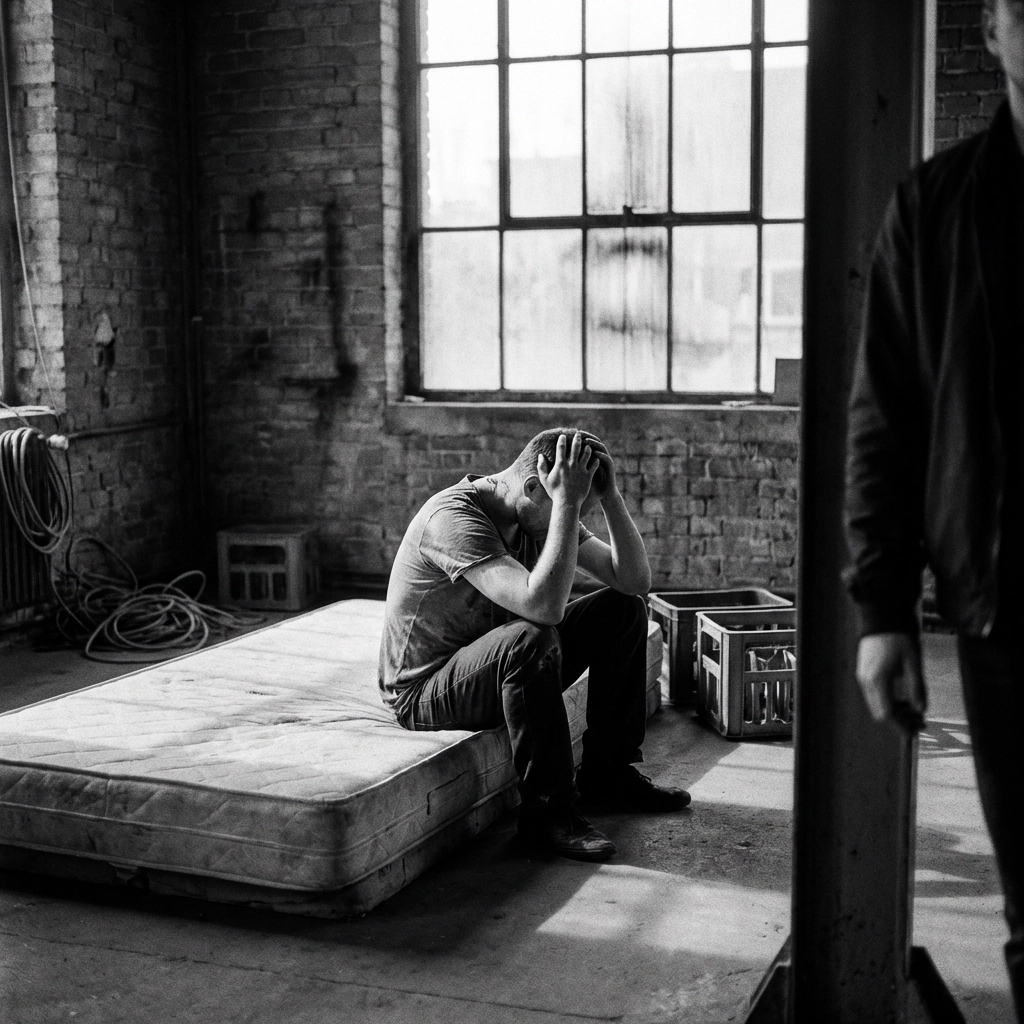
How to Talk About This With a Partner
Bringing up a taboo kink is terrifying. But here's a framework that actually works:
Start with the why, not the what. Instead of "I want to touch you while you sleep," try "I've been thinking about power dynamics and vulnerability in our sex life. Can we talk about what that means to both of us?"
Normalize the conversation. Reference articles like this one. Share that somnophilia is a recognized, widely experienced fantasy. You're not dropping a bomb, you're opening a dialogue.
Ask about their fantasies first. Make it mutual. Creating space for their desires makes sharing yours feel less like a confession and more like an exchange.
Accept that "no" is a complete answer. Not everyone will be into this. That's okay. Rejection of a fantasy isn't rejection of you.
For more on navigating these conversations, check out our guide on how to introduce BDSM and roleplay to your partner.
The Bottom Line
Somnophilia exists in the shadows because we're afraid to look at it directly. But taboo doesn't mean evil. Fantasy doesn't mean action. And desire: even the weird, uncomfortable, hard-to-explain kind: deserves honesty.
The kink community has a phrase: your kink is not my kink, but your kink is okay. Somnophilia, practiced ethically with enthusiastic prior consent, falls under that umbrella. It's edge play for the psyche. A dance with vulnerability that requires trust, communication, and courage.
So if you've been quietly Googling "somnophilia meaning" at 2am, wondering if you're alone: you're not. You're just human. And humans are gloriously, uncomfortably, endlessly complicated.
Now close that incognito tab. You don't need it anymore.


