


8 Body Awareness Exercises That Will Change You
Most of us are living entirely from the neck up. We are a collection of anxious thoughts, Slack notifications, and dopamine loops, dragging a physical vessel around like a piece of luggage we forgot the combination to. We’re over-caffeinated, under-touched, and hopefully cynical about anything that smells like a retreat in Bali.

"Body awareness" isn't a luxury: it’s a survival mechanism. It’s the difference between disassociating and actually being present.
We don't need "light and love." We need to hack our nervous systems back into reality. Here are eight body awareness exercises for the rest of us: the messy, the tired, and the skeptical.
1. Tactile Mapping: The Anti-Orgasm
Most of the time we touch ourselves (or others), there is an end goal. We’re looking for a specific reaction, a peak, or a release. Tactile mapping is the opposite. It’s about scanning the skin’s surface with zero agenda.
Find a patch of skin: your forearm, your thigh, the back of your hand. Use your fingertips, or even better, a texture like a silk scarf or a cold piece of metal. Move as slowly as possible. Notice where the skin feels tight, where it’s porous, where the hair follicles create tiny bumps.
The goal isn't to get turned on; it’s to actually inhabit the boundary between you and the rest of the world. In the kink world, this is a foundational skill.
2. The Mirror Gasp: Hijacking the Rhythm
Have you ever noticed how your breath hitches when you’re startled? That’s your sympathetic nervous system taking the wheel. The Mirror Gasp is a way to intentionally use breath to sync up with another person, effectively "hacking" each other’s rhythms.
Sit across from a partner. One person takes a sharp, audible "gasp" of air, and the other mirrors it immediately. Do this several times until the rhythm becomes a loop. It’s jarring, it’s slightly uncomfortable, and it’s incredibly effective at snapping you out of a mental spiral. It forces your brain to pay attention to the external cue and the internal response simultaneously. This is the raw version of "conscious breathing": no flute music required, just two people trying to stay in the same room.

3. The Inventory of Aches
The traditional "body scan" usually asks you to find "white light" or "relaxation." Let’s be real: I’m 36, I drink too much coffee, and I sit in a desk chair that’s probably older than I am. My body doesn't feel like white light; it feels like a dull throb in my lower back and a jaw that’s been clenched since Tuesday.
Instead of looking for peace, look for the pain. Scan your body and catalog the hangovers, the sore muscles, the places where your clothes feel too tight. Acknowledge the inflammation. By acknowledging the "Inventory of Aches," you stop fighting the reality of your physical state and start inhabiting it.
4. Floor Gravity: When the Head is Spinning
Lie down flat on your back. Don’t try to "relax" into it; just notice how the floor pushes back. Gravity is the only constant. Feel the weight of your skull against the wood, the way your shoulder blades hit the surface, the heels of your feet. This is "grounding" for people who hate the word grounding. It’s a physical reminder that no matter how fast your brain is moving, the earth is still holding you up.

5. Vagus Nerve Humming: The Internal Vibrator
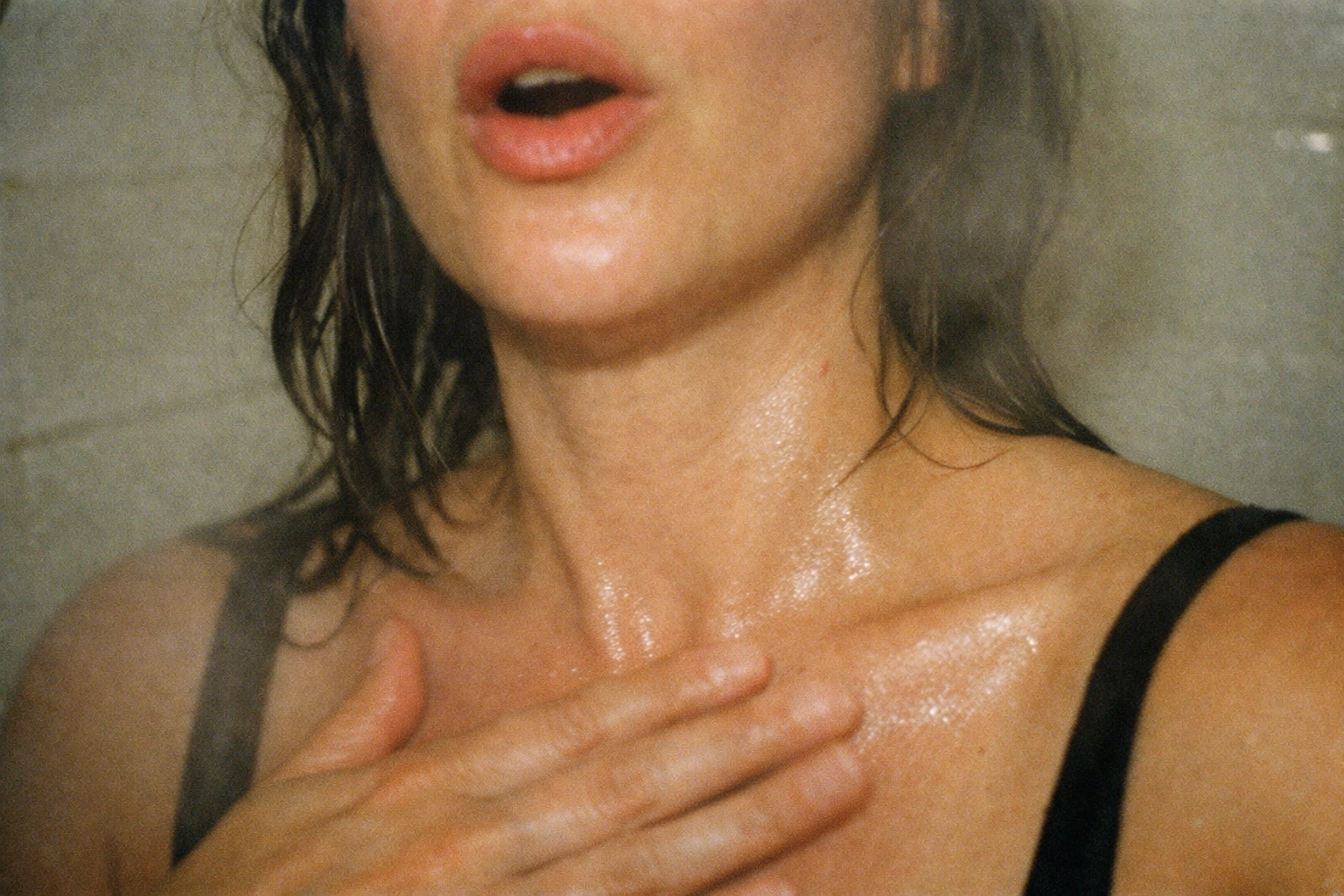
The vagus nerve is the "superhighway" of your parasympathetic nervous system. It’s responsible for the "rest and digest" mode that we so rarely visit. You can stimulate it through deep, guttural humming.
Close your eyes and make a low "mmm" sound in the back of your throat. Try to feel the vibration in your chest, then your throat, then your lips. It sounds woo-woo, but it’s pure biology. Vagus nerve stimulation is a legitimate medical treatment for anxiety and depression. This is basically just the DIY, punk-rock version of that. It’s an internal massage for your nerves when you’re too "on" to function.
6. The Uncomfortable Stare
Eye gazing is often presented as this beautiful, soulful experience. In reality, it’s usually incredibly awkward. And that’s exactly why it works.
Set a timer for three minutes. Look a partner (or even yourself in a mirror) directly in the eyes. Don't try to look "loving." Don't try to look "deep." Just look. You will feel the urge to blink, to laugh, to look away, to crack a joke to break the tension. Don't. Lean into the discomfort. This is about witnessing a body: and being witnessed: without the performance of "being okay." It’s vulnerable in a way that feels like peeling off a layer of skin.

Is body awareness necessary for better sex? Absolutely. You can’t feel pleasure if you aren't actually "in" the body that’s receiving it. Many people who struggle with "getting out of their head" during sex find that somatic exercises (like the ones listed here) are the missing link. It’s about moving from "thinking about sex" to "feeling the sensation."
7. Shadow Mirroring
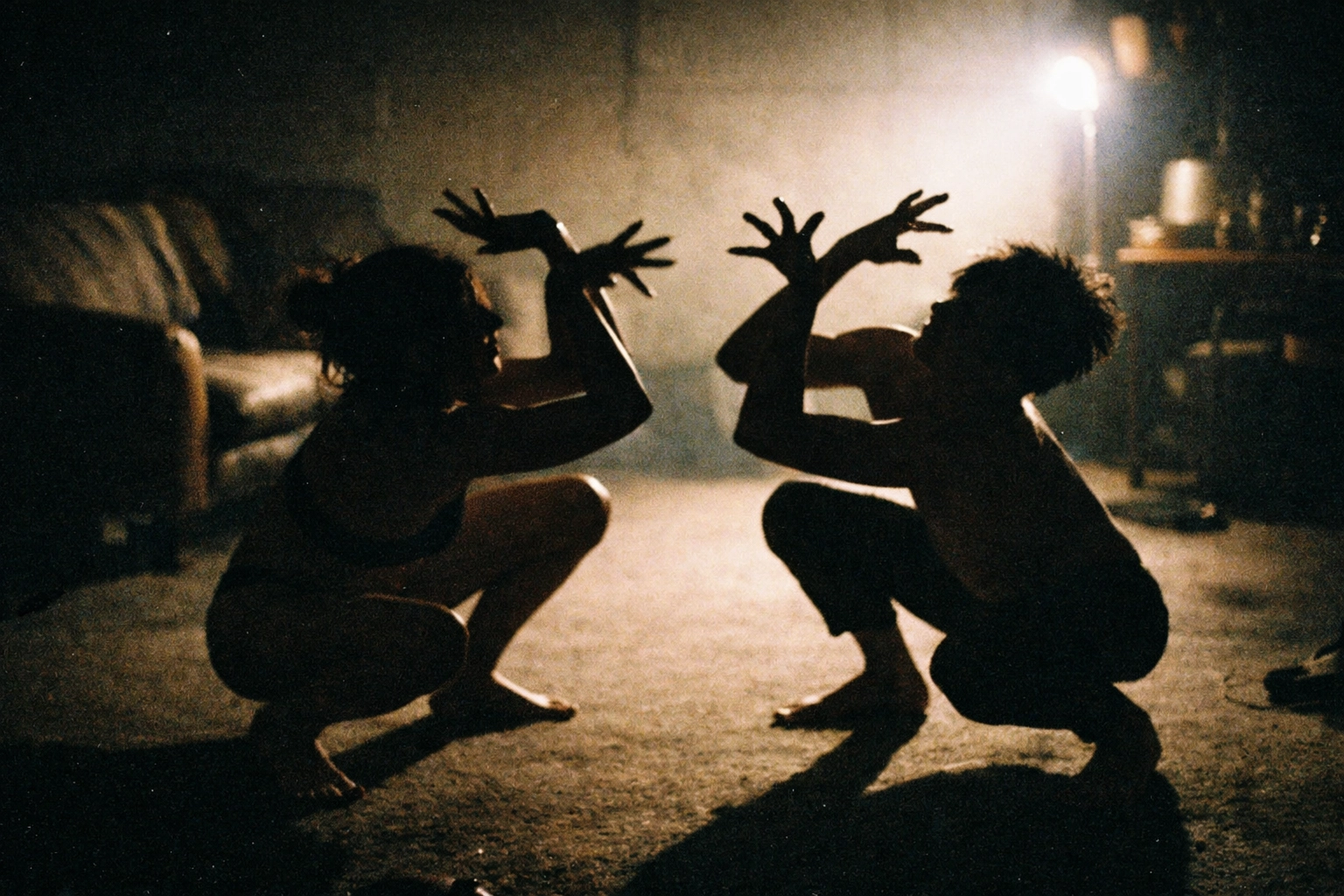
Stand facing a partner. One person begins to move: slowly, strangely, without rhythm. The other person mirrors them exactly, like a reflection.
The key here is non-verbal trust. You have to watch their body so closely that you anticipate their next move. It builds a kind of "somatic empathy" that you just can't get through talking. If you've ever wondered why some people need impact play to feel connected, it’s often because the physical feedback is the only thing loud enough to drown out the mental noise.
8. Visceral Listening: Organs Over Urban Noise
We spend our lives listening to sirens, techno, and the hum of refrigerators. Visceral listening is about turning the volume up on the inside.
Sit in a quiet (or relatively quiet) spot. Try to find your heartbeat without touching your pulse. Can you feel it in your ears? Your fingertips? Can you feel the movement of your stomach or the expansion of your lungs? It’s about tuning into the "visceral" reality of being an animal. You are a biological machine made of wet organs and electricity. Sometimes, remembering that is the most grounding thing in the world.
Why do we struggle with embodiment?
We live in a culture designed to keep us disembodied. Screens, caffeine, and constant productivity demands keep our energy focused upward and outward. Reclaiming body awareness isn't about becoming a "wellness guru": it's about reclaiming the hardware your consciousness is running on.
At the end of the day, your body is the only place you ever truly live. It’s messy, it’s often tired, and it definitely doesn't look like a stock photo of a yoga retreat. But it’s yours. And in a city as chaotic as Berlin, or a life as demanding as yours, being able to find your way back into your own skin is the ultimate act of rebellion.

