


Kink Sheet: The 'Yes, No, Maybe' List for Kinky Couples
Updated: Apr 16
Here’s the anthropology-lite truth they don’t put in porn: spontaneity is massively overrated. That whole “let’s just see where the night takes us” energy? Great for picking a Netflix show. Truly cursed for the first time someone ties you to a bedframe.

Winging it is for amateurs who want to end up in an argument, a panic attack, or, worst case scenario, explaining rope burns to a very judgemental nurse. Real intimacy—the kind that lets you explore the weird and wonderful corners of your sexuality—needs the logistics of a project manager and the nerve of a poet.
Enter: the kink sheet. Yes, a sheet. Stay with me.

The Problem With "We'll Figure It Out"
Most couples who dip their toes into BDSM do it backwards: consume vibe-heavy content, buy one optimistic pair of cuffs, then try to improvise a scene with all the grace of a drunk giraffe. Communication happens after someone’s feelings get cooked or a limit gets stepped on. Shocking: this is not the vibe.
The issue isn’t desire—it’s translation. Most people genuinely don’t know what they want until they’re presented with options. And even when they do know, saying “I want you to call me degrading names while I’m restrained” to someone who’s seen you rage-cry over Excel formatting is… a lot.
Structure becomes your best friend here. Not because kink should feel clinical, but because clarity is the opposite of awkward. When you know what’s on the table (and what’s not), you stop second-guessing mid-scene and start actually enjoying yourself.
What Is a Yes/No/Maybe List, Actually?
A Yes/No/Maybe list is exactly what it sounds like: a communication tool that helps partners express sexual interests and boundaries by sorting activities into three columns.
Yes: You’re into it. Enthusiastic consent. Put it in rotation.
No: Hard limit. Not negotiable. Park it.
Maybe: Curious, conditional, or context-dependent. Needs more info and an actual plan.
The genius is in its simplicity. Instead of a vague, terrifying conversation like “so… what are you into?”, which usually ends with both people mumbling “normal stuff?”, you’re responding to the same prompts. It removes the pressure of inventing desires on the spot and creates space for honesty without the performance anxiety.
Think of it less as a contract and more as a menu. You’re not obligated to order everything, but at least you know what the kitchen can make.
Quick FAQ people actually Google (and whisper to their therapist)
Q: Is a Yes/No/Maybe list just for BDSM? A: It’s perfect for BDSM because it deals in risk, power, and logistics—but it works for anyone who wants sex to be less “guessing game” and more “mutually engineered good time.”
Q: What if our lists don’t match? A: Then you just learned something useful before you learned it the hard way. You build scenes out of overlapping Yeses, and you treat “No” like it’s sacred.
Q: What does “Maybe” actually mean? A: “Maybe” is a category with subtext. It can mean “I’m curious,” “I need more education,” “only if X is true,” “only giving, not receiving,” or “only when I feel emotionally safe.” The spreadsheet is where you put the subtext in writing.
Why High Performers Love This (And You Should Too)
If you’re someone who thrives on structure elsewhere—the type who colour-codes a calendar and has strong opinions about systems—you’ll find kink a lot hotter once it’s organized. BDSM for high performers isn’t about being “good” at sex; it’s about applying strategic thinking to something that actually matters: your pleasure, your partner’s, and everyone leaving the room feeling intact.
The irony is that preparation buys you more spontaneity, not less. When boundaries are already mapped, you can improvise inside them without constantly stopping to ask “are we okay?” every 40 seconds. It’s the same reason jazz musicians learn theory before they start riffing.
If you want a deeper read on power, roles, and why your brain melts in the good way, start with our primer on female-led relationships and how structure can be part of the turn-on—not the enemy of it.
The Actual Spreadsheet: Your Copy-Paste Template (Make This the Main Event)
Here’s the part you came for. Below is a Yes/No/Maybe checklist you can copy into Google Sheets and fill out separately before comparing notes. Do it individually first, then share—because “I guess I’m fine with it?” is not a kink, it’s a coping mechanism.
If you only do one thing from this article, do this spreadsheet. It’s the unsexy admin that makes the sexy part possible.
The Yes/No/Maybe Kink Checklist (Copy/Paste Into Google Sheets)
Instructions:
Rate each activity Y (Yes), N (No), or M (Maybe). Add notes for conditions (e.g., “only giving, not receiving,” “only with safewords and aftercare,” or “only if we’ve discussed risks”).
This is also where you flag logistics: toys, set-up, privacy, pain tolerance, medical considerations, and what “stop” looks like in real time.
Category | Activity | Number 1-10 (1 no interest – 10 very excited) | Giving (G) Receiving (R) | Notes/Conditions |
Sensation Play | ||||
Bondage | ||||
Blindfolds | ||||
Gags | ||||
Power Exchange | ||||
Role Play | ||||
Miscellaneous | ||||
Add your own: Leave blank rows for activities that aren’t listed. The point is to be comprehensive, not prescriptive.

How to Actually Use This Without Making It Weird
The spreadsheet is a tool, not a mood-killer. Here’s how to use it without turning your bedroom into a corporate onboarding session:
1) Fill it out separately. Set a deadline (annoying, effective). This prevents one person from mirroring the other person’s answers out of politeness.
2) Compare with zero theatre. If your partner marks a hard no on something you wanted, that’s not rejection—it’s data. Respect it immediately and move on.
3) Treat “Maybe” like a briefing, not a flirt. A “maybe” needs clarification:
“What would make this a yes?”
“What would make this a no forever?”
“What are the non-negotiable conditions?” (Safeword style, intensity caps, aftercare, privacy, tools, time limits.)
4) Turn overlap into actual scene options. Your shared Yeses aren’t a personality test result. They’re a build list.
5) Revisit it. Preferences change. A hard no today might become a curious maybe later—or vice versa. Updating the sheet is normal. So is getting bored and wanting new input.
For a broader safety mindset (the stuff people skip because it’s “not sexy” until it saves your ass), read: 6 Essential BDSM Safety Tips for Every Practitioner.
A Note on First-Time Rope: Please Don't Wing This
Rope is where the spreadsheet stops being “communication cute” and starts being actual physical safety. Rope looks effortless on Instagram. In practice, it’s anatomy (nerves, circulation), equipment (quick release), and attention span (yours).
If rope is on either of your lists—even as a Maybe—read our deeper take on why people crave it (and why it’s not just aesthetics): Bondage as Therapy? Why Rope Isn’t Just for Sex.
Basic rope safety rules (non-negotiable, not vibes-based):
Never tie around the neck or restrict breathing.
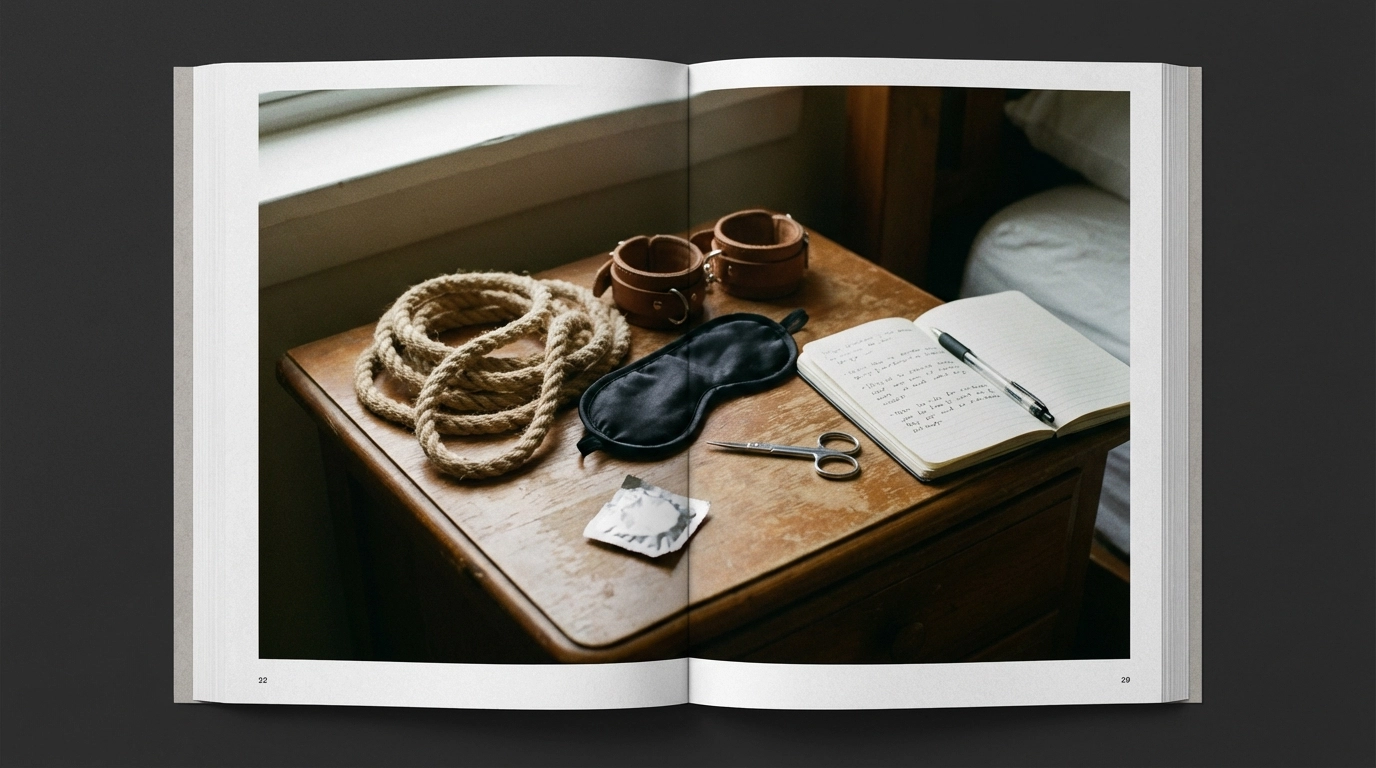
Keep safety shears within arm’s reach (not “somewhere in the apartment”).
Check circulation constantly; numbness/tingling means untie immediately.
Start with limbs, not suspension. Suspension is advanced. You are not advanced yet.
Learn quick-release and pressure awareness before you get creative.
The spreadsheet helps you clock whether rope is even mutual before you invest in jute and a rigging point. If one partner marks it as a hard no, congrats—you just saved yourself an awkward evening and €50 on rope you’ll resent in a drawer.

Doesn't This Kill the Mystery?
No. It kills the anxiety. Mystery is "I wonder what my partner secretly desires." Anxiety is "I wonder if I just massively crossed a line and now they're dissociating but too polite to say anything."
The couples who communicate best tend to have the most adventurous sex lives, because they've built a foundation of trust that allows for actual risk-taking. You can't push boundaries if you don't know where they are.
Fill out the spreadsheet. Have the conversation. Then put it away and go have the kind of sex that requires it.


