


First Sex Toy Guide: A Raw, Cynical Manual for Beginners
Your first sex toy feels like a commitment. You're standing in front of a wall of silicone or scrolling through pages of products that all claim to be "life-changing," and your brain is screaming that you're about to make the wrong choice. That you'll buy something too big, too weird, too intimidating. That it'll sit in a drawer and silently judge you for wasting money on plastic you'll never use.

Most first-time buyers overthink it. The internet wants you to believe there's a perfect starter toy that will unlock some secret pleasure dimension, but really, you're just trying to figure out what doesn't feel completely alien inside or against your body. This isn't about mastering anything. It's about curiosity with a little bit of anxiety mixed in.
So let's strip this down. No wellness-blog nonsense, no "journey of self-discovery" framing. Just the practical shit that actually matters when you're trying to buy your first sex toy without spiraling into decision paralysis.
Why Material Isn't Boring
You're going to see "body-safe silicone" everywhere, and your eyes will glaze over because it sounds like something from a medical supply catalog. But this is the one area where you can't afford to be lazy.
Cheap toys are made from porous materials, think jelly rubber or PVC, that trap bacteria no matter how much you scrub them. They degrade, they smell weird after a few uses, and they're essentially impossible to fully sterilize. Body-safe silicone, on the other hand, is non-porous. It doesn't harbor bacteria. It's the same material used in medical-grade products, which means it's designed to go inside your body without causing irritation or infection.
This isn't about being precious. It's about not giving yourself a yeast infection because you bought the cheapest option on the internet. Silicone costs more upfront, but it lasts years if you take care of it. And "taking care of it" just means washing it with mild soap and water. That's it.
Other body-safe options include stainless steel, glass, and ABS plastic (usually used for the hard outer shells of vibrators). But for a first timer, silicone is your baseline. Soft, flexible, easy to clean, and doesn't feel like you're inserting a piece of lab equipment.
Start Small or Start Nowhere
There's this weird cultural pressure to go big, like size is somehow correlated with confidence or sexual sophistication. It's bullshit. Starting with something small isn't admitting defeat. It's acknowledging that your body needs time to adjust to new sensations, especially if you've never used anything before.
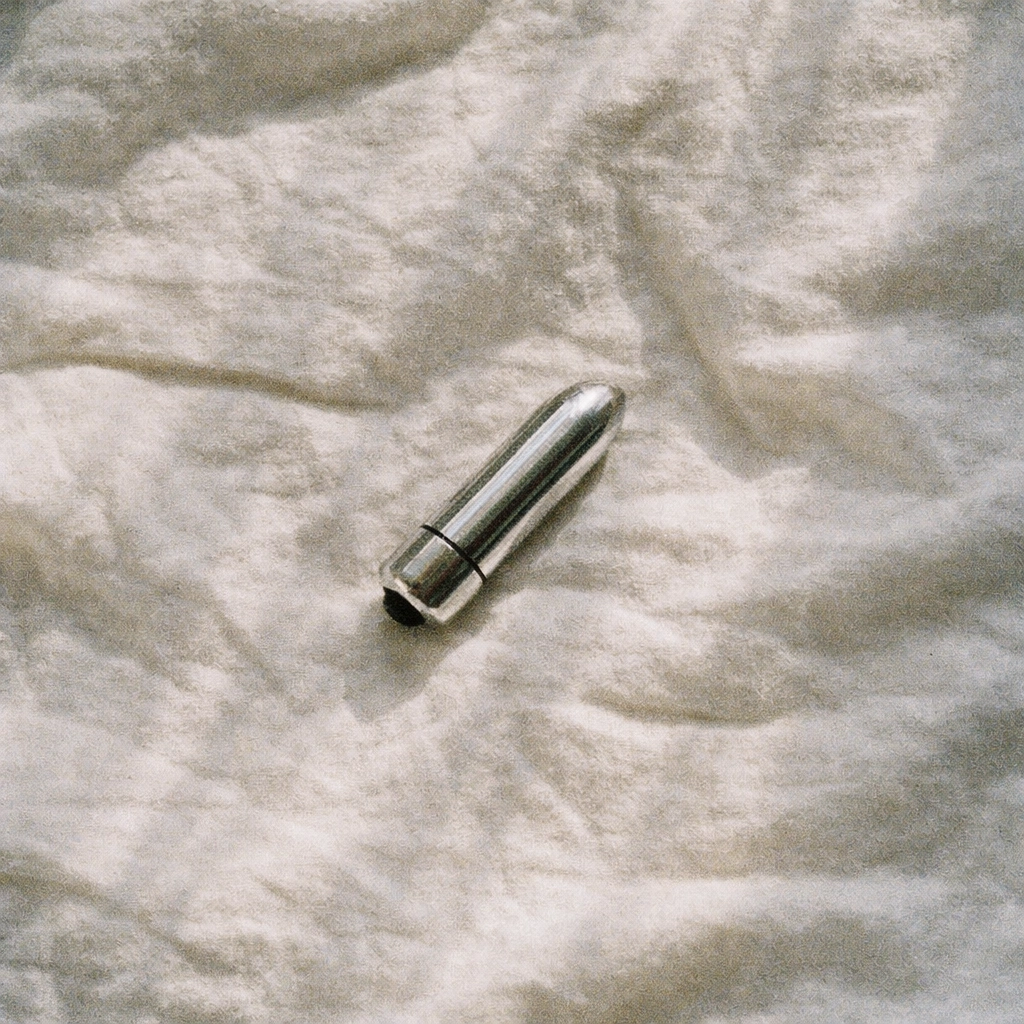
A bullet vibrator is the least intimidating entry point. It's small, discreet, affordable, and designed specifically for external clitoral stimulation. Most are about the size of your thumb. You turn it on, you hold it where it feels good, you adjust the speed. There's no learning curve, no complex insertion angles, no worrying about whether you're "doing it right."
If you want something for penetration, a slim dildo, around 4 to 5 inches insertable length and 1 to 1.5 inches in diameter, is your best bet. It's enough to feel something without the panic of "this is never going to fit." You can always size up later once you know what you like. But there's no prize for starting with something intimidating.
Can you use a regular vibrator as your first sex toy? Yes, if it's small and straightforward. A classic wand-style vibrator can work, but they're bulkier and sometimes too powerful for beginners. Bullet vibes or slim vibrators with adjustable speeds give you more control and less sensory overload.

The Features That Actually Matter (and the Ones That Don't)
Marketing loves to overcomplicate this. You'll see toys with 12 vibration patterns, app connectivity, dual motors, thrusting mechanisms. For a first-timer, most of that is noise.
Here's what actually matters:
Rechargeable over battery-powered. Batteries die at the worst moments, and constantly replacing them gets expensive. USB-rechargeable toys cost a bit more upfront but save you money and frustration long-term.
Waterproof. Not because you're planning some elaborate shower fantasy, but because waterproof means you can actually wash it properly. Non-waterproof toys are a pain to clean and limit your options.
One-button controls. You don't need a remote control or a touch-sensitive interface. A single button that cycles through speeds is enough. When you're in the middle of using it, the last thing you want is to fumble with complicated settings.
Quiet motor. If you live with roommates or thin walls, motor noise matters. Look for toys marketed as "whisper-quiet." It's not just about discretion, it's about not being pulled out of the moment by a sound that reminds you of a broken kitchen appliance.
What doesn't matter? Vibration patterns. Seriously. Most people find one or two settings they like and ignore the rest. The toy that promises 10 different pulsing rhythms is banking on you thinking more options equals better. It doesn't.
External, Penetration, or Anal: Pick Your Lane
Your first toy doesn't have to do everything. In fact, it's better if it doesn't. Trying to find one product that handles clitoral stimulation, vaginal penetration, and G-spot targeting is how you end up with something that does all three poorly.
If you're curious about external stimulation:
A bullet vibrator or a clitoral suction toy. Suction toys use air pulses instead of vibration, it's a rhythmic pulsing sensation that some people love and others find too intense. Start with a bullet. It's cheaper, simpler, and easier to control.
If you want penetration:
A slim, non-vibrating dildo made from silicone. No bells, no whistles. Just a basic, body-safe dildo that lets you explore what penetration feels like without the distraction of vibration. If you want both, a small vibrator designed for internal use works, but keep the diameter under 1.5 inches.
If you're thinking about anal:
Start with a small plug with a flared base. The flared base isn't optional, it's the only thing stopping the toy from getting lost inside you, which is a real risk with anal play. Look for something marketed specifically for beginners, with an insertable length around 3 to 4 inches and a narrow tip. And use lube. A lot of it. The anus doesn't self-lubricate, so skimping on lube is how you end up sore and swearing off anal forever.

What's the best first sex toy for someone who's never used one before? A bullet vibrator. It's small, non-intimidating, affordable, and designed for external use, which means there's no pressure to "figure out" insertion. You can experiment with speed and placement without overthinking it.
The Vulnerability No One Mentions
Here's the part most beginner guides skip: buying your first sex toy is weirdly vulnerable. You're admitting, to yourself, at least, that you want to explore your body in a way that feels private and maybe a little embarrassing. You're worried it'll arrive in obvious packaging.
You're wondering if the person you're sleeping with will feel threatened by it. You're asking yourself if using a toy means you've somehow failed at being satisfied with just hands or a partner.
None of that is true, but it feels true when you're staring at your cart wondering if you should just close the tab and forget about it.
The reality is quieter. You'll use it once or twice. You'll figure out what feels good and what doesn't. You'll probably realize it's less of a big deal than you built it up to be. And if you don't like it, you'll learn something about your preferences and move on. That's it.
If you're introducing a toy into partnered sex, the conversation matters more than the object itself. Most people aren't threatened by a piece of silicone, they're threatened by the idea that you're not satisfied. So frame it as addition, not replacement. "I want to try this together" works better than "I bought this because you're not enough." (For more on navigating those conversations, check out the Kink Sheet guide on how to talk about what you actually want.)

Do you need to tell your partner you bought a sex toy? Not if you're using it solo. But if you want to bring it into partnered sex, having the conversation first makes everyone more comfortable. Frame it as something you want to explore together, not a solution to a problem.
What Actually Happens After You Buy It
You'll probably overthink the first use. You'll read the instructions twice, even though they're just "charge it and turn it on." You'll wonder if you're supposed to feel something immediately or if pleasure is supposed to build gradually. You'll adjust the speed, the angle, the pressure, trying to find what works.
And maybe it clicks right away. Or maybe it doesn't, and you feel a little disappointed because you expected fireworks and got more of a "huh, that's different" response. Both are normal. Your body needs time to figure out what it likes, especially if you're introducing a new type of stimulation.
Start at the lowest setting. Work your way up slowly. If it feels like too much, dial it back. If it feels like nothing, try a different angle or more pressure. There's no deadline. You're not performing for anyone.
The other thing no one tells you: you might not use it as often as you think. The first few times, it's exciting and new. Then it becomes just another option, something you reach for when you're in the mood for that specific type of stimulation. And that's fine. A sex toy doesn't have to revolutionize your life to be worth buying. Sometimes it's just a nice addition to the rotation.
The Stuff That Doesn't Matter Until It Does
Packaging and discretion. Most reputable online retailers ship in plain boxes with generic return addresses. But if you're genuinely paranoid, look for brands that explicitly advertise discreet shipping. Amazon works in a pinch, though you'll pay more and have less control over what you're actually getting.
Storage. You don't need a fancy lockbox. A clean drawer or a small fabric bag works. Just keep it away from other silicone toys: silicone can react with itself if stored touching, which degrades the material over time.
Cleaning. Wash it before and after every use with mild, unscented soap and warm water. Let it air dry completely before storing it. If it's waterproof, you can also boil it for a few minutes to sterilize it, though most people don't bother unless they're sharing toys between partners.
How do you clean a sex toy properly? Wash it with warm water and mild, unscented soap before and after every use. If it's waterproof and made of silicone, you can boil it for 3-5 minutes to fully sterilize it. Avoid harsh chemicals or scented soaps, which can irritate sensitive skin.
The Bottom Line
Your first sex toy isn't a test. It's not a statement about your sex life or your relationship status or how adventurous you are. It's just a tool: a piece of silicone or plastic that might feel good, might feel weird, or might sit in a drawer for six months until you're curious enough to try again.
Start small. Choose body-safe materials. Skip the complicated features. And remember that most people's first toy experience is underwhelming not because the toy sucks, but because they expected it to instantly unlock some secret level of pleasure. It doesn't work that way. You're learning what your body responds to, and that takes time.
If it doesn't work out, you're out maybe $50 and you've learned something. If it does, you've added a new option to your solo or partnered sex life. Either way, it's not the high-stakes decision your anxiety is making it out to be.


