


About Somnophilia: Inside the Sleeping Kink
Updated: Mar 27
There are kinks you can casually drop into conversation—bondage, spanking, roleplay. And then there’s somnophilia: a fetish so wrapped in taboo that most people won’t even name it. But behind the whispered shame and moral panic is a kink that’s ultimately about trust, power, and a very specific kind of vulnerability.

Also called the sleeping kink, somnophilia is the arousal that comes from the idea of someone being asleep, unconscious, or pretending to be. It’s not new. But like many kinks that flirt with loss of control, it gets misread. Often. Especially online.
Let’s clear things up.
What Is Somnophilia About, Actually?
Arousal in the presence of a sleeping body isn't about the sleep itself; it’s about the total suspension of the ego. When the prefrontal cortex, the brain’s commanding officer, shuts down for the night, the body enters a state of absolute, unguarded vulnerability. For the somnophiliac, this isn't a lack of presence. It is a specific, high-octane physiological state where the "power of the passive" takes center stage.
In the mechanics of somnophilia exploration, the thrill is found in the Delta wave state. This is the deepest stage of non-REM sleep where heart rate, blood pressure, and brain activity reach their lowest points. To an observer, this isn't just "rest." It is a body in its most primitive, honest form. The arousal comes from the stark contrast between the intense, hyper-aware state of the "waking" partner and the profound, rhythmic stillness of the "sleeping" partner. It’s a sensory feast: the heavy scent of sleep-warm skin, the dead weight of a limb, and the rhythmic, involuntary pulse of the carotid artery.
The Neuroscience of Absolute Trust
We talk about trust like it’s a Hallmark card, but in the bedroom, or the dungeon, it’s a neurochemical transaction. When a partner agrees to a somnophilia scene, they are essentially handing over their central nervous system. Research into the psychology of paraphilias suggests that for many, the appeal lies in the absence of rejection. A sleeping person cannot judge, cannot critique, and cannot withdraw.
This isn't just about "getting away" with something. It’s about the neurobiology of the parasympathetic nervous system. When we are asleep, our defense mechanisms are offline. For the dominant partner, interacting with a body in this state provides a unique form of "information gain", you are seeing the body as it exists without the social mask. You are touching a person who is incapable of performing. For the submissive partner, the arousal often stems from the psychological "drop" of knowing they are being handled, used, or simply watched while they are completely incapable of intervention.
Is Somnophilia a Kink?
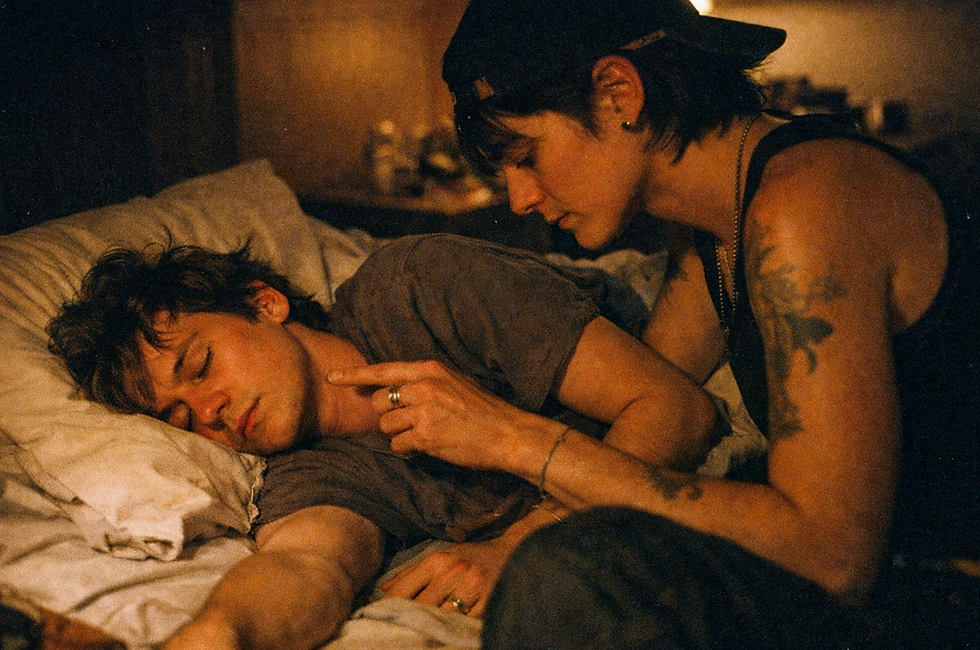
At its core, somnophilia is about interacting with a sleeping partner in a way that feels erotic. That might mean simply watching someone breathe softly beside you. It might mean exploring touch, sensory play, or even power exchange dynamics while one person is in a passive, sleep-like state—real or pretend.
And no, this isn’t about non-consensual encounters. In safe and ethical kink, somnophilia is always negotiated beforehand. It's a scene, a roleplay, or an agreed-upon act built around trust and clear limits.
In other words: if it’s consensual, it’s not creepy. It’s kink.
Why Is Sleep So Sexy?
Eroticizing sleep taps into some ancient, primal wiring. The helplessness, the stillness, the idea that someone is completely yours, if only for a moment. It’s not about dominance in the traditional BDSM sense—it’s quieter, more psychological.
There’s also something deeply intimate about sleep. You can fake a lot of things in sex, but sleep isn’t one of them. Being asleep is one of the few times we fully surrender control. That’s what makes it a powerful space to play with trust.
And for some, the arousal is also tied to slowness. Watching a lover breathe, inching fingers across skin, building a scene that simmers instead of explodes. It’s about tension. About what could happen. About what you’ve already agreed will.

The Ethical Infrastructure: CNC in the Dark
Let’s get the legalities out of the way because there's no time for "gray areas." Without prior, explicit, and sober consent, somnophilia is sexual assault. Full stop. The kink only exists within the framework of Consensual Non-Consent (CNC).
The infrastructure of a safe somnophilia exploration requires more than a casual "yeah, sure, wake me up whenever." It requires a kink sheet or a Yes-No-Maybe manifesto that details exactly what is on the table.
The "Wake Up" Protocol: Does the scene end the moment the partner opens their eyes, or is the "grogginess" part of the fantasy?
Sensory Boundaries: Are fluids okay? Impact? Restraints?
Safety Signals: Since a sleeper can’t use a traditional safe word, non-verbal cues or "pre-set" alarms are often used. If the sleeper moves a certain way or doesn't respond to a "status check" squeeze, the scene stops.
This ethical scaffolding is what turns a potentially traumatic event into a high-value power exchange. It creates a "container" where the sleeper can truly let go, knowing the boundaries are hard-coded into the agreement.
Variations on the Theme
Somnophilia shows up in different ways for different people:
Pretend sleep: one partner fakes being asleep while the other initiates a pre-agreed scene.
Sleepy sex: low-energy, haze-like encounters where one partner is groggy or just waking up.
Fantasy-only: some people are aroused by the idea of somnophilia, but never act on it IRL.
Hypnosis roleplay: incorporating trance states, “knock-out” play, or controlled surrender.
The Consent Conversation
Let’s be very real: this kink needs crystal-clear consent. Because without it, the line into abuse is razor thin.
In healthy somnophilia dynamics, couples or play partners negotiate things like:
Who initiates the scene
When and how consent is given
How to safely “wake” someone if needed
What kind of touch or activity is on the table
Check-ins afterward to debrief and make sure both people feel respected
Some even use code phrases or written consent rituals, especially if a scene is going to happen when one person is actually asleep or half-asleep. Consent doesn’t have to be loud or performative—but it does have to be there.
Who’s Into It?
You might be surprised. Somnophilia isn’t just a niche in the BDSM world—it’s been around in erotica, fanfiction, even mainstream porn for decades.
For some people, it’s tied to comfort or caretaking. For others, it’s more about control, curiosity, or the thrill of doing something secret. And for many, it’s part of a broader exploration of power—who moves, who stays still, who gets to act, who stays passive.
In queer circles especially, somnophilia can also intersect with gender play, dominance, or resisting traditional ideas about how desire should look.
Somnophilia vs. Cockwarming: The Art of Stillness
Many people confuse somnophilia with general stillness kinks, but the two are distinct animals. While cockwarming is about the meditative heat of connection, somnophilia is about the unreachability of the partner. In cockwarming, there is often a shared, conscious focus on the sensation. In somnophilia, the "observer" is playing with a ghost.
The "waking" partner in a somnophilia scene often experiences a heightened sense of "Main Character Energy." They are the only conscious witness to the intimacy. This can be incredibly grounding for individuals who spend their professional lives in high-stress, high-negotiation environments. To be in a room where you are the only one making decisions is a profound psychological relief.
Why Do We Eroticize the "Silence"?
The silence of a sleeping partner is a vacuum that the waking partner fills with their own desire. In a world that is constantly screaming for our attention, the silence of a body at rest is the loudest thing in the room. It’s a sensory deprivation of sorts: without the feedback of moans, words, or eye contact, the other senses (touch, smell, the sound of breath) become hyper-vivid.
There’s also the "forbidden" element. Evolutionarily, we are programmed to protect sleepers. Subverting that protective instinct to create an erotic charge is a classic "taboo" play. It’s the same mechanism that makes impact play or breathwork erotic: it takes a biological "danger" or "vulnerability" and recontextualizes it as pleasure.
FAQ: Navigating the Sleep Fetish
Is somnophilia common?
While exact numbers are hard to pin down because of the stigma, it’s one of the most common fantasies in the "power exchange" spectrum. Most people have experienced a "morning wood" scenario that borders on somnophilia without even realizing it.
How do you safely start somnophilia exploration?
Start with "Feigned Sleep." One partner pretends to be asleep while the other initiates touch. This allows for immediate communication if something feels "off" before moving into actual unconscious play.
What is the "Power of the Passive" in this context?
It’s the erotic charge derived from being completely unresponsive. It allows the submissive to experience a total lack of responsibility for the sexual encounter, and the dominant to experience total control over the physical narrative.
Can somnophilia be practiced solo?
Many people use "sleeping" or "unconscious" tropes in adult media to satisfy the urge. It’s a way to explore the psychological triggers of unresponsiveness without the logistical hurdles of CNC.
What are the biggest risks?
Beyond the obvious legal and ethical risks of non-consent, the biggest risk is "The Drop." Coming out of a deep sleep into an intense erotic scene can be disorienting for the nervous system. Proper aftercare: warmth, hydration, and grounding conversation: is non-negotiable once the "sleeper" is fully awake.
The 2026 Perspective on Somnophilia
As we move further into an era of hyper-performance, the desire to simply "be" (or to be with someone who is simply "being") will only grow. Somnophilia isn't a "weird" outlier; it’s a logical response to a world that never stops talking. It’s the eroticization of the one time we are truly beyond reach.
The silence of sleep isn't empty. It’s a heavy, textured space where trust and power collide. If you’re going to step into it, do it with your eyes wide open: even if theirs are shut.
Fantasy and ethics
Somnophilia is one of those fetishes that forces us to ask questions about fantasy, ethics, and the politics of desire. But that doesn’t mean it’s dangerous. Like any kink, it’s only unsafe when we don’t talk about it, don’t set boundaries, and don’t respect each other’s humanity.
When done right, sleep play can be slow, sacred, and deeply sensual. It’s about what happens when you trust someone enough to let go.
Let that be the point.


