


How To Use A Whip: A Professional Upgrade
A whip crack is auditory foreplay with teeth: a micro-second that turns a room from chatty to obedient. The crack lands like a command.
And yes, it’s also a sonic boom. Not metaphorically. Literally. The business end of your whip goes supersonic and the air complains loudly.

This isn’t a beginner pep-talk. This is professional-level reality: if you can’t control mechanics of power—distance, timing, kinetic energy transfer—don’t pick up the whip and point it at a human. You’re not here to cosplay competence.
The Crack: Mechanics of Power

The crack isn’t the tip “snapping.” It’s the traveling loop—that moving bend in the whip—racing down the thong until part of it breaks the sound barrier. That pressure shock is your crack.
The clean explanation (for people who like receipts): mathematicians Alain Goriely and Tyler McMillen mapped the whip’s loop dynamics and showed how the loop, not the tip alone, produces the shock wave as it goes supersonic. Here’s the accessible write-up: University of Arizona — physics of whip cracking. (If you’re the type who actually reads papers, Goriely & McMillen’s work is the rabbit hole.)
Why this matters in kink terms: sound is leverage. Sound is control. The crack arrives before contact ever does, and your sub’s nervous system doesn’t wait for a committee meeting to decide how to feel about it.
Q&A: “Is a whip crack really a sonic boom?”
Yes. A good crack is a small sonic boom produced when the whip’s traveling loop reaches supersonic speed. That sharp “bang” is a shock wave in air, not a little string making a cute noise.
Types of Whips: What You’re Actually Buying (And What It Says About You)
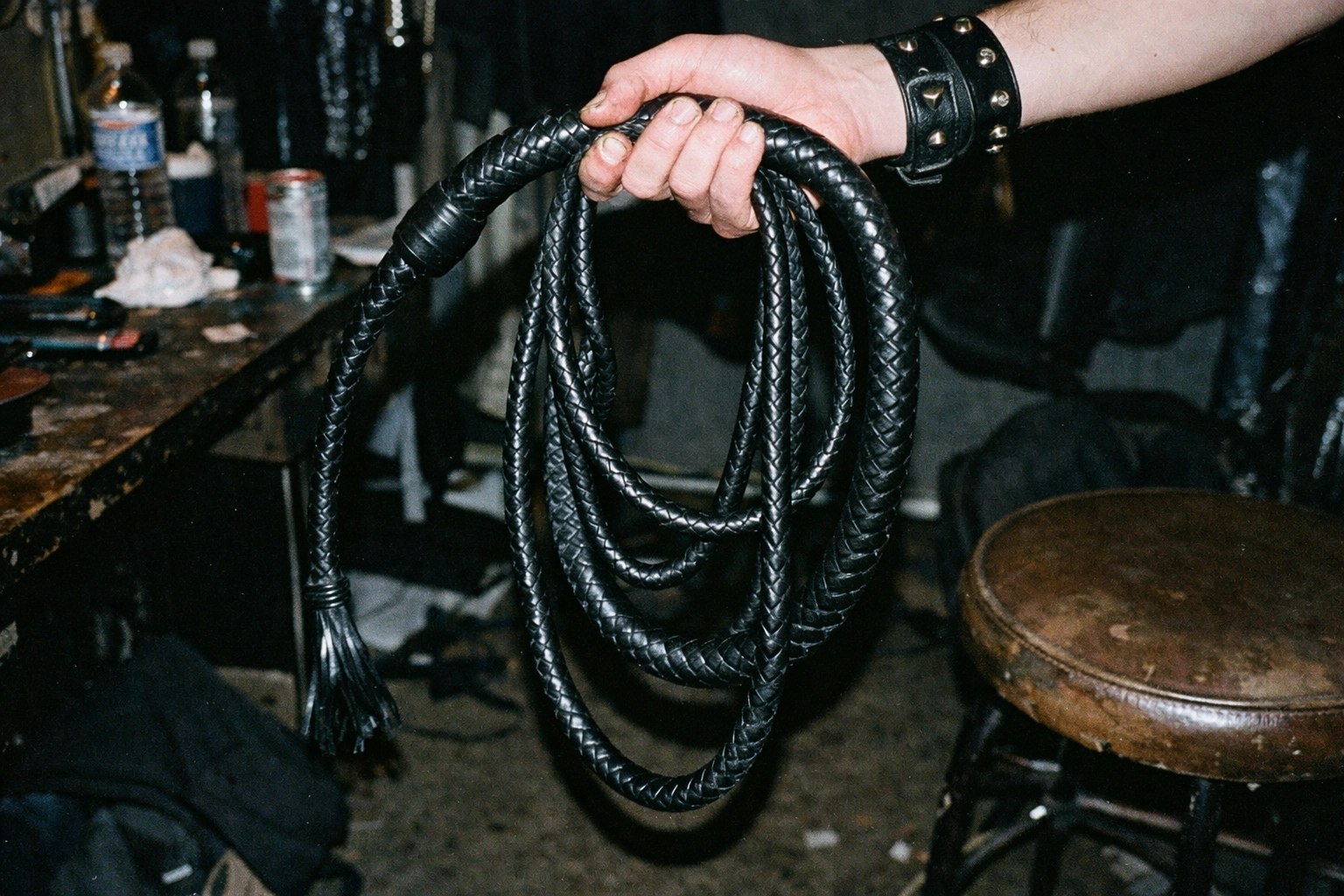
Bullwhip (6–8 feet): the classic authority figure
A bullwhip is the long-form essay of whip craft: braided thong, proper taper, fall, and a cracker that makes the whole thing speak. The taper is the point—less mass as you go, more speed at the end, better kinetic energy transfer, cleaner crack.
A 6-footer is the “I’m serious but I still rent” option: enough length to form a stable loop without you repainting your ceiling.
Best for: clean fundamentals, big sound, scene-setting intimidation where the air itself feels supervised.
Snake whip (3–5 feet): small-space menace
No rigid handle, no training wheels. A snake whip is all flexible body—coilable, portable, and perfect for close quarters. It’s what you pick when you want control in tight rooms and you’re not allergic to technique.
Harder to crack than a bullwhip because you can’t “anchor” with a handle. Your timing has to be immaculate, your loop has to behave, and your ego has to stop asking for applause.
Best for: precision, travel, dungeon rooms where the walls are too close and the vibe is too loud for mistakes.
Stock whip: rhythm weapon, not a mood board
Long handle, shorter thong. Stock whips are built for fast, repeated cracks—more percussive, more pattern-based. Great for auditory dominance; less ideal if your goal is heavy impact.
Best for: advanced cracking, rhythmic control, sound-play scenes where contact is optional.
Single tail / Dragon tail: blunt truth, delivered in leather
Dragon tails are the heavy, thick, thudding cousins. Less taper, more mass, more “this is going to leave an opinion.” If a bullwhip is a scalpel with a speaker system, a dragon tail is a well-aimed brick wrapped in craft.
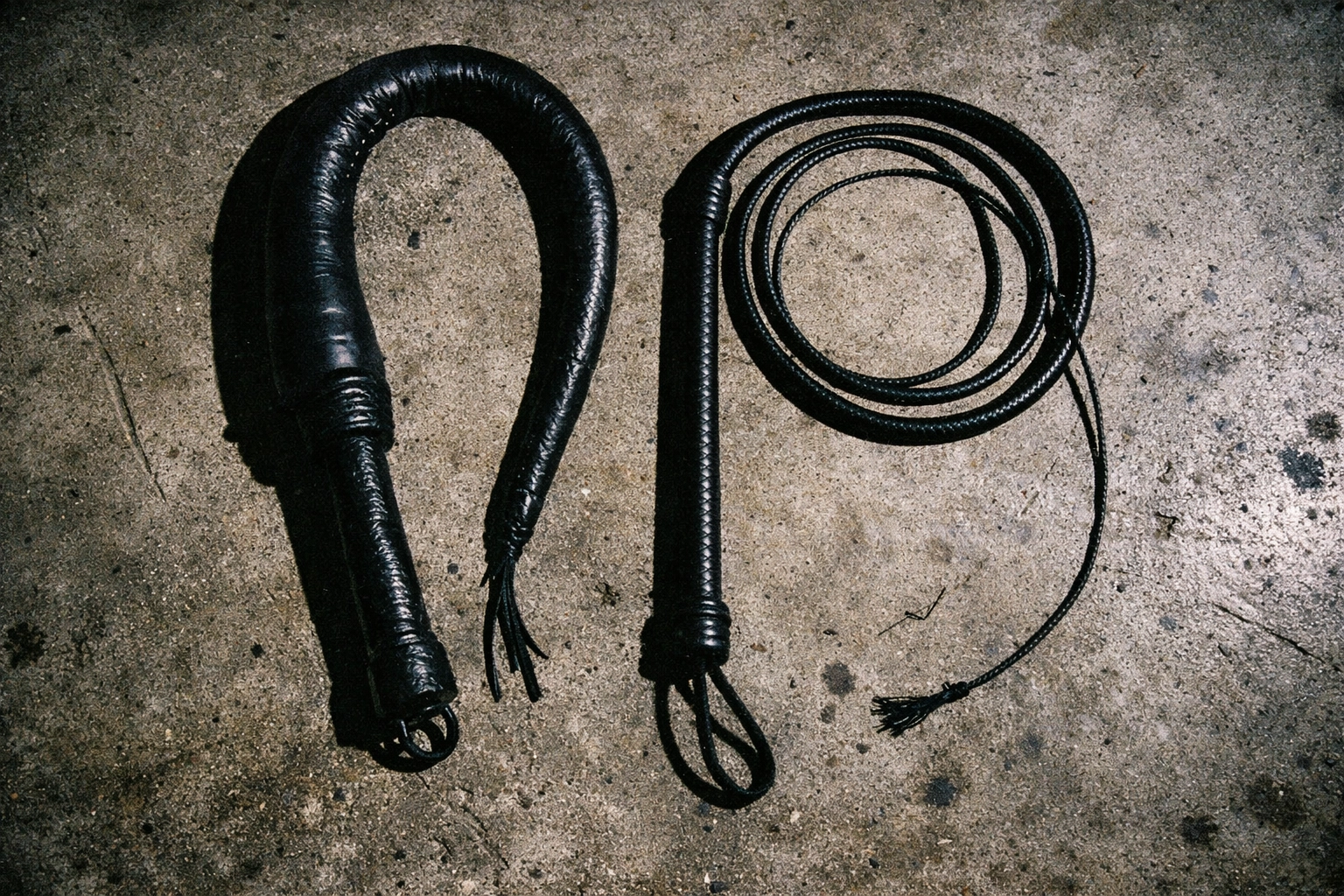
Best for: experienced players, heavy impact, and high-level BDSM dynamics where intensity is negotiated, earned, and delivered with precision.
Cracking Technique: The Throw vs. The Flick (High-Level, Not Cute)
If you want a crack that sounds expensive, you need two distinct skills that amateurs mash into one messy swing:
1) The throw (placement)
The throw is the delivery: how you send the whip into the space so the loop can form on the correct line, at the correct distance, without wrapping around anything you’ll regret.
Think: controlled cast, clean trajectory, zero drama.
2) The flick (the snap that creates the loop)
The flick is the stop. The abrupt deceleration that kicks a loop into the thong and turns motion into speed down the line. This is where the crack gets born.
If you can’t explain the difference in your own body, you’re not “learning.” You’re gambling.

The C-loop (basic crack, professional standard)
Relax your grip. Death-grip kills finesse.
Load the whip back with control—no windmill nonsense.
Drive forward and stop your hand like you mean it.
The C-loop forms, runs the taper, goes supersonic, and the room suddenly understands who’s in charge.
Q&A: “What’s the easiest whip crack to learn?”
The overhead crack with a clean C-loop is the most reliable starting point because it teaches loop formation and timing without extra showy motion.
BDSM Application: Sound as Psychological Warfare (And Why It Works)

Whip play isn’t just “impact.” It’s control via anticipation. The crack is a threat the body believes even when the mind tries to stay smug about it.
Before you get poetic about dominance, do the unsexy admin: consent, limits, aftercare, and a real negotiation structure. The kink sheet yes/no/maybe manifesto is the grown-up way to do this—because “we’ll just feel it out” is how people end up quiet for the wrong reasons.
Psychological play: cracking the air (control without contact)
Cracking the air near a submissive (near, not at) is pure nervous system manipulation:
The sound hits like a gunshot.
The pressure change is physical.
The brain tags it as danger before it tags it as “hot.”
That’s sensory overload, and it’s effective. Use it to demand stillness, to test composure, to build a rhythm that your partner starts obeying automatically.
Technique notes (because this is where pros separate):
Crack off-axis, not toward the body.
Establish a tempo, then break it. The unpredictability spikes arousal.
Let silence do its job. Don’t fill it with chatter.
Targeting: where the sting lives (and where you become a liability)
If you’re making contact, understand this: the tip/ cracker is where the sting concentrates. The body of the whip can be warming, dragging, thudding. The tip is the sharp punctuation.
Body (thong) = broader contact, warming-up strikes, less surgical.
Tip/cracker = high-precision sting, high risk if you’re sloppy.
You don’t “hit harder.” You transfer energy better.
Session flow: warm-up → control → precision (the professional arc)
A competent whip session has an escalation curve, not a random playlist.
1) Warm-up (broad, predictable) Start with the whip’s body on safe, padded zones: ass, thighs, upper back. You’re building heat, checking reactions, calibrating distance, and keeping the nervous system open instead of shocked shut.
2) Control phase (sound + near misses) Introduce air cracks and near passes. This is where submission deepens without bruises doing the negotiating for you.
3) Precision phase (tip-led, deliberate) Only when you have full control do you bring in sharper, tip-led sensations. Flat, direct lines. No wraparound nonsense. Wraparound is how you tag ribs, stomach, or neck—aka how you ruin your own reputation.
Safety reality check Avoid spine, ribs, joints, kidneys, neck, face. Don’t improvise anatomy. If you need a wider safety framework for impact, use Playful’s BDSM safety guide and act like someone who wants to be invited back.
Q&A: “Can you use a bullwhip for BDSM safely?”
Yes, but only with real technique, clear consent, and strict targeting (ass/thighs/upper back). Whips are high-speed tools—mistakes escalate fast.
Materials: The Workhorses (And the Luxury Flex)
Cowhide & buffalo: what the scene actually uses
Kangaroo leather is the luxury flex: light, strong, clean performance, and priced accordingly. Great if you want the highest-end build and you’re into the leather-care ritual as a form of devotion.
But the real workhorses—the stuff that shows up, performs, and doesn’t need a shrine—are:
Cowhide: the classic standard. Reliable weight, solid durability, the familiar thud/sting balance when the taper is done right.
Buffalo: usually heavier and denser. More “authority,” less “whippy.” It can feel grounded and brutal in a way that reads very… honest.
Material matters, but don’t get mystical: taper and build quality decide how efficiently energy moves.
The vegan revolution: paracord & synthetics (maintenance-averse, loud, and mean)
Paracord is for the maintenance-averse who want a loud crack without the leather-care ritual.
Yes, paracord whips crack—often louder and easier than leather because they’re lighter, accelerate quickly, and don’t need a break-in period to start behaving.
Why they’ve taken over practice sessions (and plenty of play sessions):
Maintenance-free: no oil, no conditioning, no humidity drama.
Consistent: reliable in weather and storage.
Colors: neon, hazard tones, or Berlin-black. You can look like a rave accessory and still generate a sonic boom.
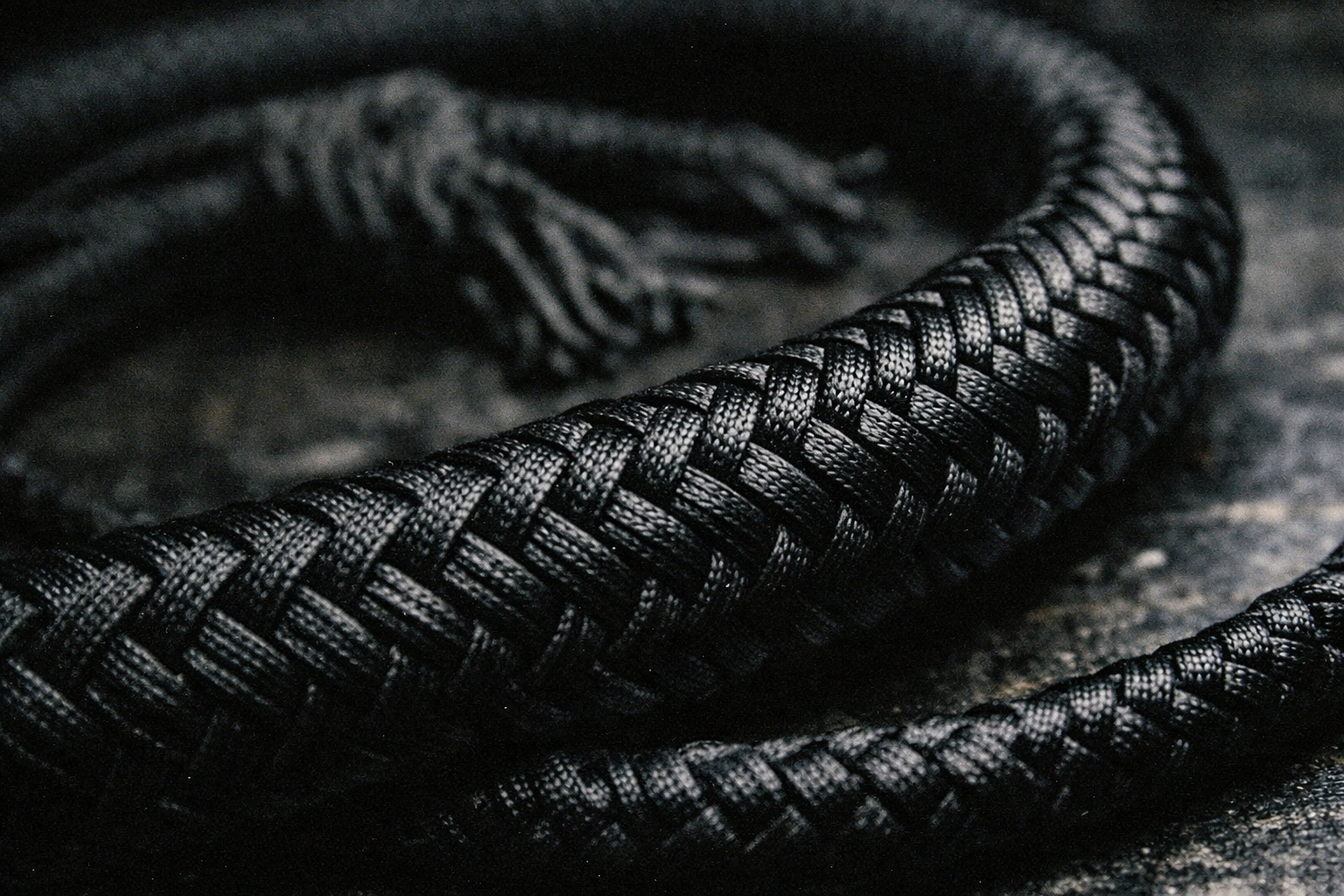
Trade-off: less leather romance, less smell, less ritual. Performance-wise? Absolutely not second tier.
Q&A: “Leather or paracord whip for BDSM?”
Leather is tactile, traditional, and has that dungeon gravitas. Paracord/synthetics are louder, easier to crack, and basically maintenance-free. Choose based on desired sensation + how much you enjoy gear upkeep.
Space, ego, and the price of sloppiness
Whip cracking needs room. Don’t pretend your kitchen is a studio. Outdoors first, controlled environment second, and only then bring it into a scene with a body attached.
And yes, you’ll hit yourself at least once. Everyone does. Consider it a small, private tax for learning a skill that can literally change the temperature of a room.

