


Liquidrom Nights: How Underwater Music Changes Your Nervous System
The specific kind of sensory exhaustion that only Berlin can gift you–
The vibration of the U2 rattling through your teeth, the gray slab of a Kreuzberg sky that seems to sit three inches above your head, and the relentless hum of a city that never really lets you "be." When you spend your life navigating high-intensity spaces, whether that’s a demanding career, the complex social dynamics of the KitKat Club, or the rigorous mental load of power exchange, your nervous system eventually starts to fray at the edges.

Usually, the "wellness" industry tells you to go buy a yoga mat and breathe into a scented candle. But some of us need something more visceral. We need a physiological override.
That’s where Liquidrom Berlin comes in. It isn't a "spa" in the fluffy, white-robe sense of the word. It’s a darkened, architectural chamber in the heart of Kreuzberg where the air is thick with salt and the music happens inside your bones.
If you’ve ever wondered why floating in a dark, saltwater pool while listening to ambient techno feels less like a bath and more like a spiritual hard-reset, the answer lies in the physics of sound and the biology of your vagus nerve.
The Dome: Brutalism as a Sanctuary
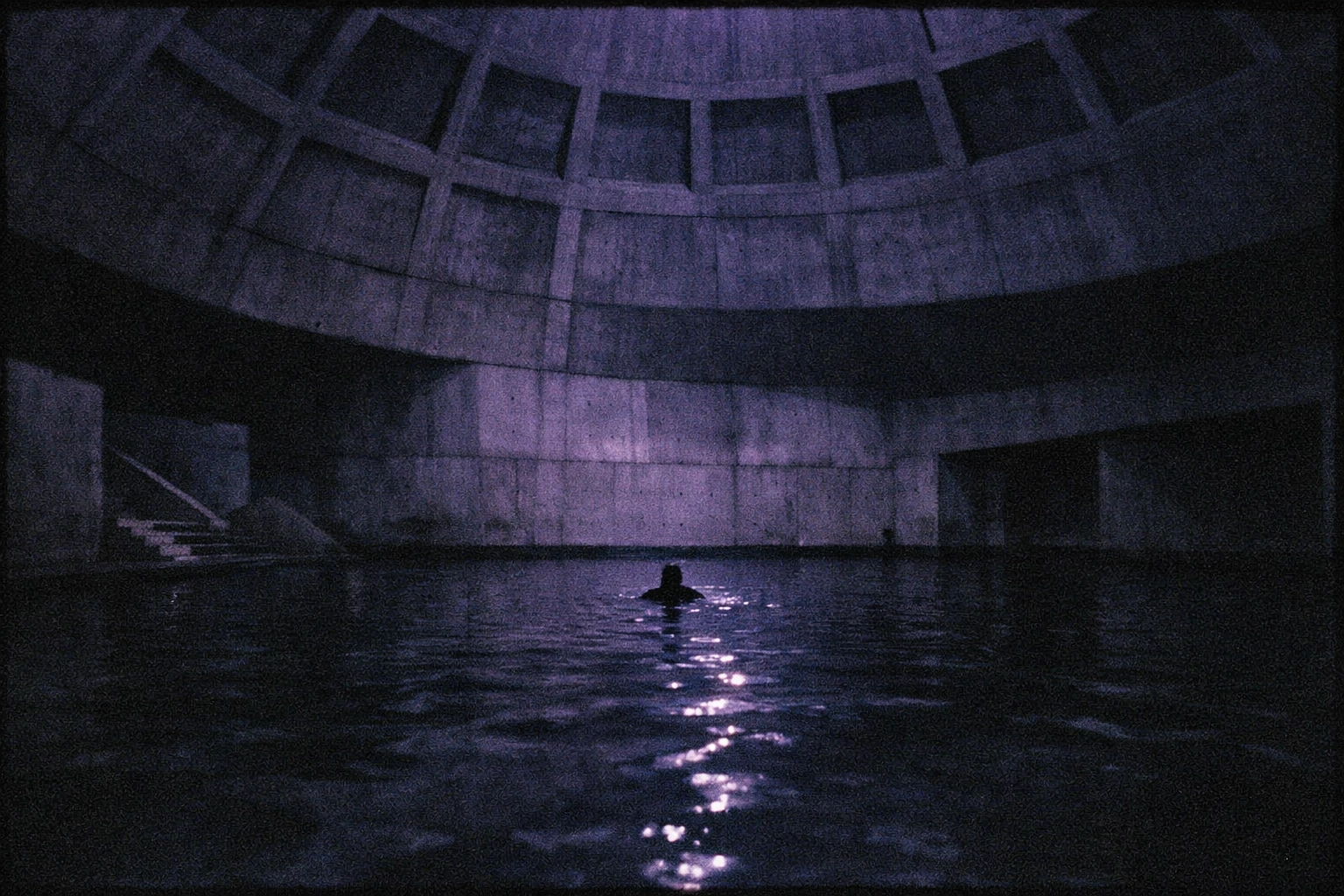
You see the roof before you see the water. The Liquidrom is housed in a structure that looks like a concrete circus tent or a minimalist space station. It’s a piece of modern architecture that eschews the "zen" clichés of bamboo and soft lighting for something much more Berlin: raw, dark, and slightly intimidating.
Inside the main hall, the "Dome," the vibe is decidedly moody. The pool is filled with warm saltwater, buoying your body so effortlessly that the concept of weight starts to feel optional. But the real magic isn't the salt; it’s the speakers hidden beneath the surface. This is the home of underwater music in Berlin, and it’s a masterclass in sensory hacking.
The Physics of Hearing with Your Skeleton
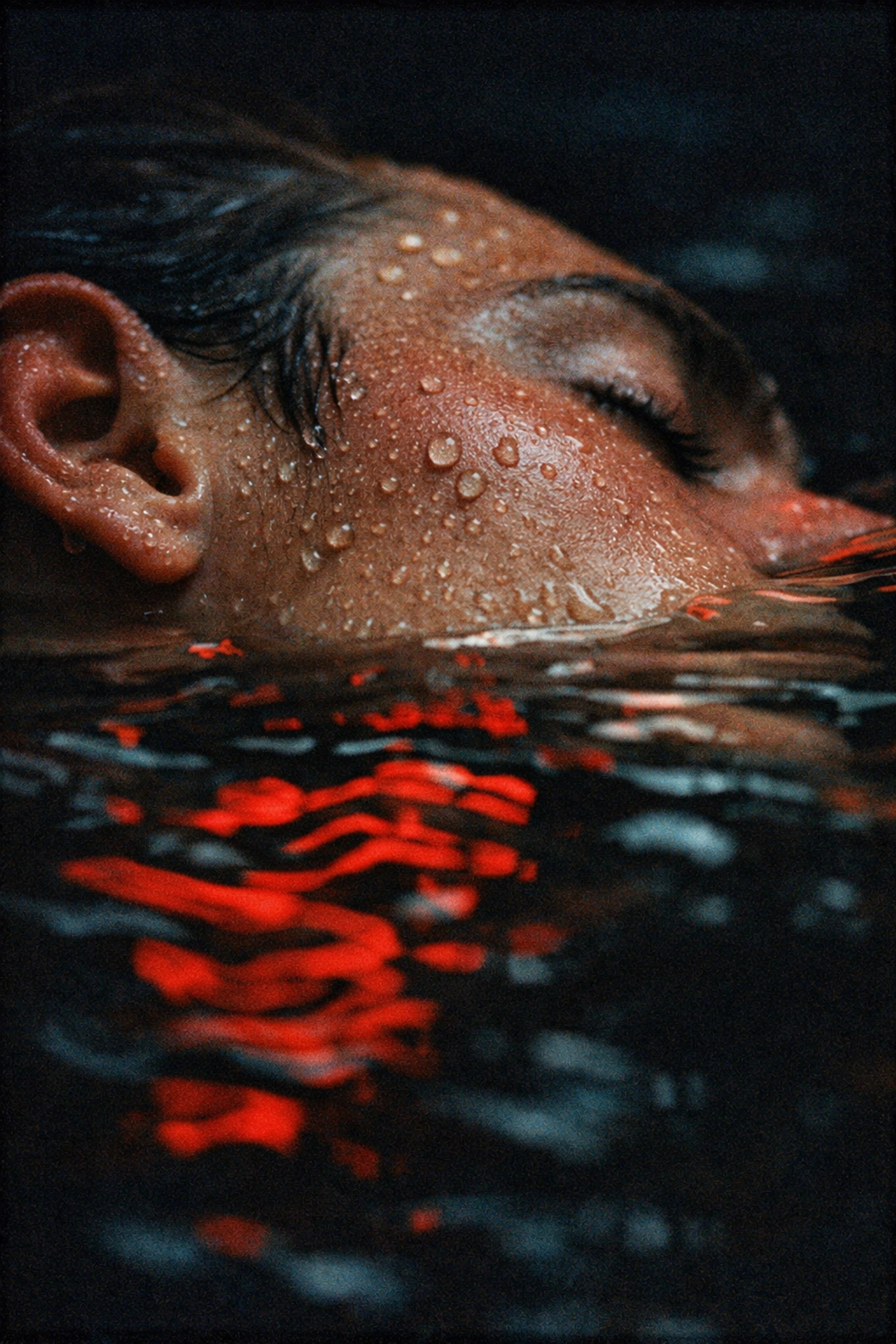
When you submerge your ears at Liquidrom, the world above the water vanishes. You aren't just hearing music anymore; you are inhabiting it.
In the air, sound waves travel through your ear canal and hit your eardrum. In the water, everything changes. Water is roughly 800 times denser than air, which means sound travels about four and a half times faster. Because your body is mostly water, the acoustic impedance is almost a match. The result? The sound doesn't just go into your ears; it vibrates through your skull and your ribcage.
This is called bone conduction. When you’re floating in that saltwater pool in Berlin, your entire skeletal structure acts as a lightning rod for the frequency. If the DJ is playing a deep, resonant bass line, you aren't just listening to it, your femur is vibrating at the same frequency as the track. It’s an immersive experience that forces the brain to process sound in a way it rarely has to. For those of us who find impact play for intellectuals a necessary release, this "internal impact" of sound offers a similar grounding effect.
From Sympathetic to Parasympathetic: The Vagal Reset
Most of us spend our waking hours in a state of sympathetic nervous system dominance. That’s the "fight or flight" mode. It’s useful when you’re dodging a cyclist on Kottbusser Tor, but it’s exhausting when it becomes your default setting. It leads to high cortisol, shallow breathing, and a general sense of being "brittle."
To fix this, we need to activate the parasympathetic nervous system, specifically, the vagus nerve. The vagus nerve is the long-distance operator of your body, connecting your brain to your heart, lungs, and digestive tract. When it’s stimulated correctly, it sends a signal to your body that it is safe to downshift.
The environment at Liquidrom is a perfect storm for a vagal reset:
Mammalian Dive Reflex: Submerging your face and body in water (especially water near body temperature) immediately slows the heart rate and redirects blood flow to the brain and heart.
Sensory Deprivation: By cutting off the visual and auditory noise of the city, the brain stops scanning for threats.
Vibrational Healing: Low-frequency sounds have been shown in clinical studies to improve "vagal tone," which is a fancy way of saying your body’s ability to recover from stress.
When you’re floating there, listening to the muffled, ethereal pulse of the underwater music, you are essentially telling your nervous system to stand down. It’s a surrender. Much like the psychology of power exchange, there is a profound relief in letting go of the need to control your environment and simply letting the environment hold you.
The Kreuzberg Vibe: No Yoga Mats Required
What I love most about Liquidrom is that it doesn’t try to be "spiritual." It’s a tech-heavy, architectural sanctuary. On Tuesday, Thursday, and Saturday nights, they bring in DJs to play anything from minimalist jazz to deep, liquid house.
The crowd isn't there to talk about their chakras; they’re there to disappear. You’ll see people who probably spent the previous night in a dungeon, tech founders trying to un-fry their brains, and locals who just need to escape the winter. It’s a very democratic kind of darkness.
The aesthetic is clean and cool. The lighting in the dome shifts slowly, deep purples, neon blues, muted reds, reflecting off the concrete walls. It feels like being inside a very expensive, very quiet machine designed specifically to make you feel human again.
Is Liquidrom Berlin worth the hype?
If you’re looking for a traditional spa with a chatty therapist and a fruit plate, maybe not. But if you’re looking for a place to lose the "self" for a couple of hours, it’s essential.
Is the water at Liquidrom actually salty? Yes. It’s a high-saline pool, which is why you float so easily. It’s closer to the Dead Sea than a standard swimming pool. This buoyancy is key to the relaxation effect, as it removes the strain on your joints and spine.
How does underwater music work at Liquidrom? The music is projected through specialized underwater speakers. If your ears are above the surface, it’s a faint hum. The second you submerge, the sound becomes crystal clear and incredibly "wide."
Do I need to book in advance? It’s Berlin. Everything is better with a plan, especially on weekends. It can get crowded, and the last thing your nervous system needs is a 45-minute wait in the cold on Möckernstraße.

A Final Word on Aftercare
We talk a lot about aftercare in the context of BDSM, but we rarely talk about it in the context of city life. Living in a high-density, high-output environment is a form of "play" that requires its own recovery.
Liquidrom nights are my personal form of aftercare. It’s the place where the static of the world gets tuned out, and the only thing left is the vibration of the music against my skin and the slow, steady beat of a heart that has finally remembered how to rest.
If you find yourself in Kreuzberg, skip the fourth espresso and go get underwater. Your nervous system will thank you.
