


The Berlin Party Turning Arabic Pop Nostalgia Into a Queer Arab Future
The most memorable parties are when you find your people.
It's when you're walking into a room and recognising something that feels like home, even if you've been unaware of the fact that you've spent most of your life looking for it. Sometimes that feeling arrives through a song. Sometimes through the smell of bakhour drifting across a dancefloor. Sometimes through the simple fact that a space exists at all.
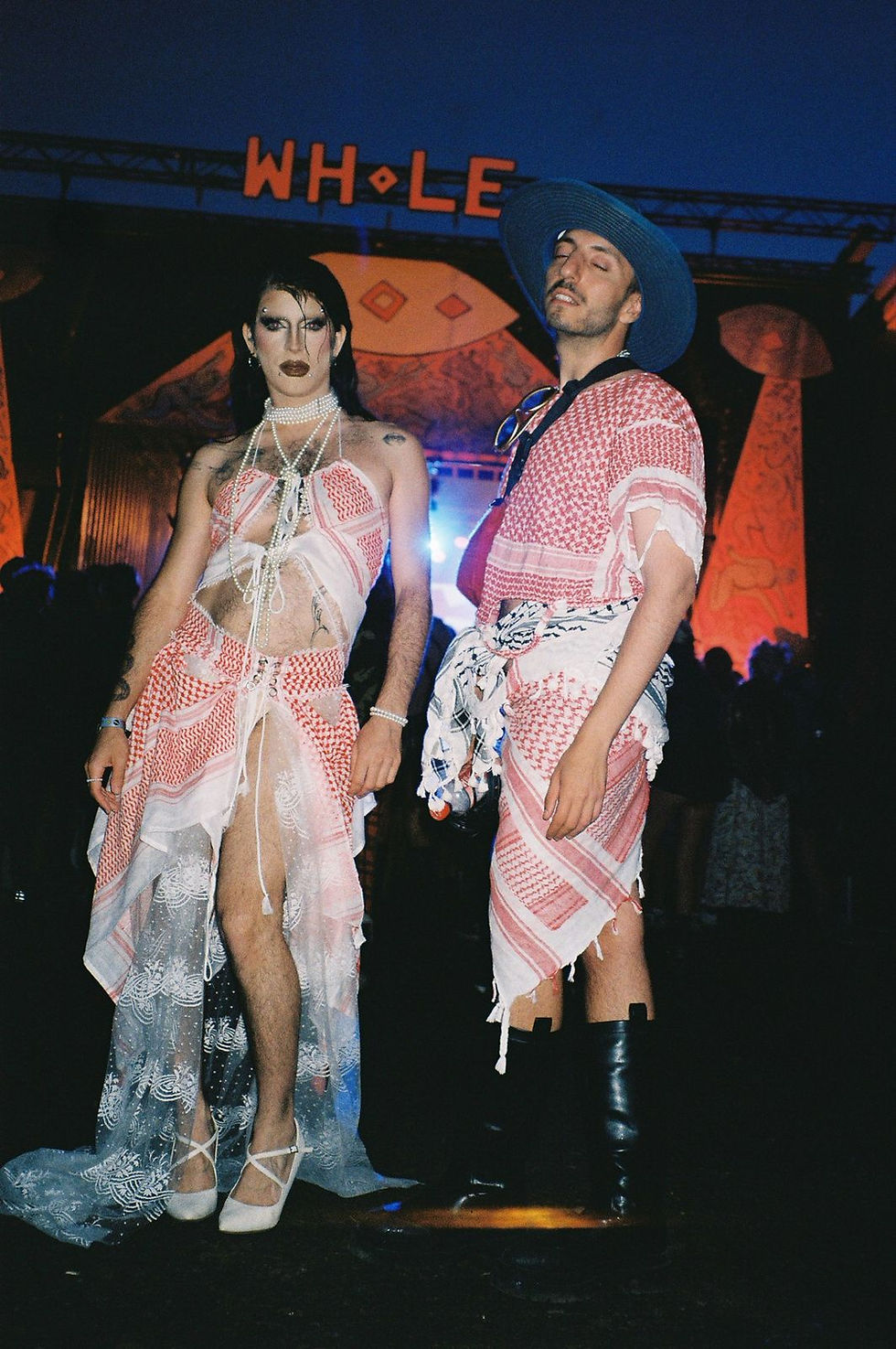
That’s the story behind ADIRA, the Berlin-based queer Arab* party, community, and cultural platform founded in 2023 by Hassandra and Zuher Jazmat (xanax_attax). Born from what its founders describe as a glaring absence in the city’s nightlife, ADIRA was created with a straightforward but powerful mission: to build a space where queer Arabs* could gather, celebrate, and exist on their own terms.
“This all started from the simple fact that there wasn’t a space for queer Arabs* in Berlin,” the founders explain. “That need was always there, and over the years it’s only grown stronger, giving our community a place to come together, celebrate, and connect.”
In just a few years, ADIRA has grown from a party into something much bigger. Since launching, it has hosted more than 100 artists across more than 30 events, spanning club nights, drag performances, workshops, exhibitions, panel discussions, and community gatherings. In 2024, it also launched what it describes as the world’s first Arab* Drag Festival, extending its reach beyond nightlife and into cultural production, visibility, and collective memory.
But music remains at the heart of it all.

ADIRA’s universe is deeply rooted in Arabic pop from the 1980s, 90s, and early 2000s — the kind of music that instantly transports people back to family living rooms, weddings, road trips, and childhood memories. The organisers see those songs as both an archive and a tool for imagining something new.
“We see Arabic-pop music as a way to reconnect with beautiful memories from the past,” they say. “But also as a genre that empowers queer and femme bodies. There’s this huge appetite for nostalgia, for revisiting the sounds and images that shaped us, and sharing them with people outside our community feels even cooler!”
Their approach is deliciously subversive:
Rather than treating nostalgia as a retreat into the past, ADIRA uses it as raw material for the future. The soundtrack might be familiar, but the context is radically different: queer bodies reclaiming space, rewriting narratives, and dancing through them.
And while plenty of nightlife projects talk about community, ADIRA seems intent on building it into every detail.

“ADIRA isn’t just a party,” the founders say. “We’ve put a lot of care into creating a full community experience, from workshops to the smallest details, how we decorate the space, the scents of bakhour filling the club, little touches that make it feel like your favorite teta’s house.”
That image — your grandmother’s house transformed into a queer club night — might be the most accurate description of ADIRA’s appeal. It’s intimate rather than exclusive, familiar rather than performative. A space designed not just for visibility, but for comfort.
At the same time, ADIRA’s existence carries an undeniable political weight. As conversations around representation continue to shape cultural spaces across Europe, the collective has become increasingly vocal about resisting tokenism and challenging orientalist ideas about both Arab* and queer identities.
“After three years we’ve learned clearly that ADIRA is inherently political,” the founders explain. “We aren’t here to be tokenised, or to fit into a Western gaze on what queer or Arab* culture should be. We insist on being visible on our own terms, confronting stereotypes and reclaiming space for queer Arab* people to be seen, heard, and celebrated without being exoticised or erased.”

That insistence feels particularly significant in a cultural landscape where marginalised communities are often expected to explain themselves before they can simply enjoy themselves. ADIRA flips that equation. Joy comes first. Celebration comes first. The politics emerge naturally from the act of creating a space where queer Arab* people can exist without compromise.
Even the name reflects that spirit. “ADIRA” is a Levantine queer slang term used to describe someone fierce, capable, and accomplished — a fitting title for a project that has quickly become one of Berlin’s most distinctive community-led cultural platforms.
As it continues to grow, ADIRA is proving that nightlife can be more than escapism. It can be archive, resistance, family reunion, cultural intervention, and dancefloor all at once.
And sometimes, all it takes to imagine a different future is hearing the right pop song at exactly the right volume.


