Search Results
1233 results found with an empty search
- Sex work and the porn industry – with porn actress Maria Riot
Sex work and the porn industry – with porn actress Maria Riot The intersection of sex work, society’s stigma, and the porn industry remains one of the most controversial, yet crucial conversations in today’s world. In this candid conversation, we sat down with sex worker, performer, and activist Maria Riot to explore what it truly means to work in the adult industry, confront societal prejudices, and challenge the narratives that society often forces onto people in this line of work. Maria Riot, a Buenos Aires native, entered the porn industry after finding an online community that would ultimately offer her not only financial independence but also a place to express herself creatively. Her journey is a reflection of the ways in which the adult industry and sex work are misunderstood, while also being a pathway to empowerment for many performers. But as Maria shares, it hasn’t come without its struggles. The adult industry, like many other subcultures, has long been fighting for the right to be seen and respected—without the shame that has been attached to it for centuries. Maria Riot interview for Playful TV Sex Work & Mental Health: The Battle for Independence For Maria, the porn industry isn’t just about being financially independent—it’s about survival. Her path into the industry wasn’t driven by fame, but by the need for mental health stability. She explains how entering the world of adult performance gave her a sense of freedom that she hadn’t found elsewhere, all while enabling her to be independent both emotionally and financially. However, Maria's journey hasn’t been without its tolls. The mental health challenges that often come with working in a stigmatized industry are very real, as she’s experienced first-hand. But beyond the personal struggles, Maria makes it clear: working in adult entertainment is not just about "getting rich on OnlyFans" or gaining notoriety. It's about an open space where individuals can take control of their bodies and define their own narrative, a space that society continuously attempts to silence. The Stigma of Sex Work: Navigating Prejudices in Porn One of the most pressing issues discussed is the societal stigma surrounding the porn industry and sex work. Maria talks about the prejudice she and others face, despite being part of a community that celebrates sexual freedom. Society's deeply ingrained moral framework makes it hard for sex workers to be seen as legitimate professionals, and for performers like Maria, the need to confront these stigmas daily becomes part of their activism. She emphasizes that while porn has a history of exploitation, the current generation of creators, performers, and activists are pushing for a shift in how the industry is perceived, advocating for performers' rights and better mental health resources. While sex work is still largely criminalized and shamed globally, Maria advocates for more understanding, better work conditions, and respect for the autonomy of workers. In an industry where exploitation is often the norm, Maria’s voice calls for empowerment, respect, and acknowledgment of adult workers as full-fledged individuals with the right to control their careers and their lives. The Community of Sex Workers: A Network of Support Maria stresses the importance of the community that exists within sex work. The solidarity among sex workers, particularly in the era of online platforms like OnlyFans, has provided an avenue for individuals to connect and build their networks. This sense of community is essential to navigating both the highs and lows of sex work, whether it's dealing with societal prejudice or the more personal challenges of self-doubt and burnout. As Maria discusses, this community not only offers support but also provides the tools for empowerment—whether it’s advocating for safer working environments, creating art, or simply offering each other emotional and financial support. The shift in sex work culture towards one of mutual respect and solidarity has been crucial in providing sex workers with an ability to redefine their work on their own terms. Maria Riot’s Legacy: Redefining the Porn Industry Maria Riot is much more than just an adult film star; she’s an activist, an artist, and a storyteller. With her background in art and performance, she’s used her platform to redefine what it means to work in the adult industry. In her world, sex work isn't about shame—it’s about breaking down barriers, challenging taboos, and creating a new narrative for both performers and consumers. Her journey is one of resilience and self-definition, pushing against a system that has long sought to dehumanize adult workers and marginalize them. In doing so, she’s creating a legacy that challenges the public’s perception of porn and sex work as a whole. Conclusion: Embracing Sex Work for What It Is Maria Riot’s story is one of empowerment, passion, and breaking down stigmas—shattering the preconceived notions that society has about sex work. It’s a powerful reminder that sex work, in all its forms, should be treated with respect and understanding, not shame or prejudice. In our conversation with Maria, we learn that while the fight for acceptance continues, there is a growing movement of performers like her, who are not only reclaiming their space within the industry but are also carving out a future where the adult industry is treated with the respect it deserves. Follow Maria Riot on Instagram: https://www.instagram.com/riot.maria.x/ Follow Maria Riot on Twitter: https://twitter.com/riotmariax
- Antigone: Why the French Techno Icon Quit DJing – A Story of Burnout, Legacy, and What’s Next
Antigone: Why the French Techno Icon Quit DJing – A Story of Burnout, Legacy, and What’s Next Antigone has been at the forefront of the French techno scene for over a decade. A resident at Concrete, a mentor to the next generation, and a producer whose tracks have defined a movement—he was one of the key figures shaping Paris’s underground. But in December 2024, he shocked fans by announcing he was quitting DJing for good. No grand farewell tour, no dramatic exit—just a quiet Instagram post saying he was done. So, why did Antigone quit DJing? And what does his departure say about the techno scene today? From Darkness to Dancefloors: Antigone’s Early Days Antigone’s journey into techno wasn’t just about music—it was survival. Like many artists, he battled personal struggles, including depression, and found solace in electronic music. Techno wasn’t just a sound; it was an outlet, a way to navigate his own mind. His deep, cinematic productions quickly set him apart. He became a resident at Concrete, the Parisian club that redefined French techno, and built a reputation for marathon sets that blurred the lines between hypnotic and relentless. With releases on Token, Dement3d, and his own label No Pain No Game, he carved out a space where emotion and intensity collided. But behind the scenes, things weren’t so smooth. Paris vs. Berlin: The Scene That Shaped Him Unlike Berlin’s industrial, anything-goes ethos, Paris had to fight for its underground. Clubs came and went, venues faced constant battles with authorities, and for a long time, techno felt like an outsider genre. Antigone, alongside artists like Shlømo, François X, and Bambounou, helped push the city onto the global stage, proving that French techno had its own identity—deep, emotional, and brutally efficient. But with success came pressure. The touring, the expectations, the unrelenting nature of the scene—it all started to wear him down. Antigone: Why the French Techno Icon Quit DJing – A Story of Burnout, Legacy, and What’s Next Why Did Antigone Quit DJing? In December 2024, Antigone announced that he was done. No scandal, no dramatic falling out—just a realization that he couldn’t do it anymore. In a farewell Instagram post , he wrote: "This decision was incredibly difficult, but I feel it is time for me to explore new horizons and embark on a fresh journey. Thank you to everyone who supported me in living my childhood dream. It’s time for something new." The statement was short, but the message was clear: burnout is real, and the scene takes its toll. Touring can be relentless—constant flights, sleepless nights, the pressure to always deliver. Antigone isn’t the first artist to step away, and he won’t be the last. He joins a growing list of DJs and producers who’ve hit a breaking point, realizing that the techno machine never stops, even when you need it to. His Sound Will Live On Antigone may have stepped away from the decks, but his influence won’t fade. His productions are still some of the most respected in modern techno, and his legacy as a mentor continues through the artists he’s helped along the way. For now, he’s stepping back. But whether it’s through production, teaching, or something entirely new, one thing is certain: Antigone’s story in techno isn’t over—it’s just entering a new chapter.
- Find Your Inner Domme: 10 Essential BDSM Books
Empowerment, Control, and Confidence From building confidence to learning the fundamentals of dominance, these top BDSM books for women will guide you every step of the way. Whether you’re brand new to BDSM or a seasoned pro looking to expand your knowledge, the right books will help you fine-tune your dominant persona and navigate the complexities of power exchange. Ready to discover your power? Let’s dive into the best books for women Dommes looking to command their space with strength and elegance. Find Your Inner Domme: 10 Essential BDSM Books 1. "The New Bottoming Book" by Dossie Easton & Janet W. Hardy Best for: Understanding the Dynamics of Power Exchange & Becoming a Confident Domme This classic book may focus on the submissive role, but trust us, it’s a must-read for any dominant looking to gain deeper insight into power exchange dynamics. The authors, Dossie Easton and Janet W. Hardy, dive deep into the psychology of both submissive and dominant roles, helping you understand the intricate balance that makes BDSM so fulfilling. Knowing the submissive mindset will allow you to engage in more respectful, consensual dominance, enhancing your own confidence as a Domme. Why It’s Great: Deep dive into BDSM power dynamics. Understanding the submissive perspective is key to confident dominance. 2. "The Dominant's Handbook" by Mistress Anne Best for: Practical Tips to Embrace Your Dominant Power For anyone eager to explore their dominant side, Mistress Anne's "The Dominant's Handbook" is an essential read. This is a guide designed specifically for women who want to take charge in BDSM relationships. From setting boundaries to learning how to wield control with confidence, this book is your go-to resource for all things female dominance. Why It’s Great: Direct, empowering advice for women who want to own their Dominant role. Packed with practical tips and exercises. 3. "SM 101: A Realistic Introduction" by Jay Wiseman Best for: Comprehensive Guide to BDSM Safety and Techniques If you’re looking for a no-nonsense, real-world guide to BDSM, Jay Wiseman's SM 101 should be at the top of your reading list. This book breaks down the essential elements of BDSM, from safety protocols to psychological aspects. By understanding the full spectrum of BDSM, you’ll be better equipped to step into your role as a Domme safely and effectively. Why It’s Great: A deep dive into BDSM safety and techniques. Perfect for anyone serious about dominant relationships. 4. "The Mistress Manual: The Good Girl’s Guide to Female Dominance" by Lorelei Best for: A Fun and Empowering Guide to Female Dominance Looking for a down-to-earth, approachable guide to BDSM that’s specifically geared towards women in dominant roles? Look no further than Lorelei's "The Mistress Manual". This book is the perfect blend of empowerment and education. Lorelei walks you through the intricacies of dominant-submissive relationships, giving you the tools to confidently take the lead, while respecting the needs of your submissive partner. Why It’s Great: Straightforward, engaging, and practical. Learn how to command respect in your BDSM scenes with confidence. 5. "The Art of Erotic Dominance: A Guide for the Domme" by Ava Sinclair Best for: Balancing Eroticism and Control in Your Domme Role In "The Art of Erotic Dominance," Ava Sinclair provides a perfect blend of eroticism and dominance. This book is about more than just physical power—it explores how to connect emotionally and create a truly fulfilling BDSM experience. Whether you're new to BDSM or looking to enhance your dominant persona, Sinclair offers useful tips for bringing out the best in both you and your submissive. Why It’s Great: Explore the erotic and psychological aspects of BDSM, with a special focus on female dominance. 6. "The Ultimate Guide to Kink: BDSM, Role Play and the Erotic Edge" by Tristan Taormino Best for: Comprehensive Exploration of BDSM, Including Female Dominance If you're looking for a comprehensive guide to BDSM with a focus on various power dynamics, Tristan Taormino’s "The Ultimate Guide to Kink" is one of the most inclusive books out there. This book isn’t just about dominance; it gives you insight into everything from role-play to the psychological aspects of BDSM, helping you understand how to mold your dominant persona to fit your unique style. Why It’s Great: All-in-one guide to BDSM dynamics. It offers a holistic view of the BDSM world, making it a great resource for building a dominant presence. Find Your Inner Domme: 10 Essential BDSM Books 7. "The Control Book: A Guide for Dominant Women" by Marlowe Best for: Managing Emotions and Control During BDSM Play What’s truly unique about Marlowe’s "The Control Book" is how it goes beyond the physical aspects of BDSM and delves deep into emotional control. This book teaches you how to maintain balance and stay emotionally grounded while embracing your dominant role. It also covers the psychological impact of BDSM and helps you create a safe, fulfilling dynamic with your submissive partner. Why It’s Great: Teaches you how to manage emotional control while maintaining dominance in BDSM scenes. Highly useful for building resilience as a Domme. 8. "Slavecraft: Roadmaps for Erotic Servitude" by Guy Baldwin Best for: Gaining Insight into the Submissive Mindset to Strengthen Your Dominance While this book focuses on the submissive role, it’s still an incredibly important read for Dominants. Understanding the submissive mindset allows you to refine your dominance techniques and create a stronger connection with your submissive. This book dives into the psychological side of BDSM power exchange, which can make your dominant role more intuitive and impactful. Why It’s Great: Gives you an inside look into the submissive mindset, which helps you become a more effective, empathetic Domme. 9. "BDSM 101: A Realistic Introduction" by Susan Wright Best for: Learning the Basics of BDSM, Consent, and Safety If you’re just starting your BDSM journey, Susan Wright's "BDSM 101" is an essential primer. This book focuses on BDSM etiquette, safety, and consent, offering a strong foundation in both the emotional and physical aspects of BDSM. As a new Domme, knowing how to respect your partner’s limits and communicate your desires effectively is key. Why It’s Great: No-nonsense introduction to BDSM practices. Perfect for building a strong foundation for female dominance. 10. "The Dominant Woman: The Art of Being a Female Domme" by Ken P. Lawrence Best for: Mastering the Art of Being a Confident and Compassionate Domme This book is your go-to resource if you're ready to fully embrace your dominant power and are looking for guidance on how to express your feminine authority with grace and confidence. Written by Ken P. Lawrence, it offers a complete overview of female dominance, from mastering BDSM techniques to understanding how to lead with compassion and respect. Why It’s Great: Learn to lead with authority and compassion. This book will help you step into your Dominant persona with confidence and clarity. Own Your Power, Command Respect Embarking on the journey to find your inner Domme is not just about adopting a role—it’s about embracing your power, confidence, and understanding the intricacies of dominance. The books on this list will help you hone your skills, learn new techniques, and empower you to confidently take charge in the BDSM world. Whether you're looking to get started or want to refine your existing skills, these resources will help you feel more empowered and in control—giving you the tools to be a strong, respectful, and empowered Domme.
- Trying out Energy Orgasm - This is What Happens
Energy Orgasms: Unlocking Full-Body Pleasure What Is an Energy Orgasm and How Can You Experience One? In the realm of human sexuality, the concept of an energy orgasm is gaining momentum, offering a transcendent experience beyond traditional physical pleasure. But what exactly is an energy orgasm, and how can you achieve this heightened state of bliss? Support our journalism and get access to extra long and uncensored episodes: https://playful-tv.ghost.io/ Trying out Energy Orgasm - This is What Happens Understanding the Energy Orgasm An energy orgasm, often referred to as a full-body orgasm or energetic orgasm, is a profound experience where sexual energy flows throughout the body without direct physical stimulation. Unlike conventional orgasms that are typically localized to the genitals, an energy orgasm encompasses the entire being, merging physical sensations with emotional and spiritual dimensions. This phenomenon goes beyond a standard climax, offering an experience of pleasure as a holistic, immersive sensation that can leave you feeling euphoric, awakened, and deeply connected to your body. As the Somananda Tantra School explains, an energy orgasm is "a flushing and disbursement of sexual energy throughout the entire body, creating a deeply transformative experience." How Energy Orgasms Work Achieving an energy orgasm requires tapping into your body’s energy flow through a combination of techniques, including: 1. Breathwork Deep, conscious breathing helps circulate sexual energy throughout the body, unlocking blocked sensations and heightening awareness. 2. Visualization Guided imagery and meditation can help direct pleasure beyond the genitals, leading to a full-body sensual experience. 3. Movement Subtle movements, such as hip circles or micro-shaking, help to unlock energy pathways, making it easier for pleasure to spread. 4. Sound Vocalization, like moaning or deep sighs, encourages the release of stagnant energy and helps enhance orgasmic waves. These practices work together to train your body to move sexual energy freely, allowing you to reach orgasmic states without direct touch. Expert Insights from Nathan Marcuzzi To gain a deeper understanding of energy orgasms, we spoke with Nathan Marcuzzi, an energy worker, breathwork facilitator, and the creator of Somagetic . His teachings focus on helping individuals access and clear their energy bodies, unlocking greater pleasure and deeper awareness. However, Marcuzzi highlights that not everyone reaches a full-body orgasm immediately. He notes that approximately 50% of his students experience an energy orgasm during his course, while others may need more practice and guidance to achieve the state. Watch a Real Energy Orgasm Experience To provide a firsthand perspective, our journalist Amanda Sandström Beijer took part in a session with Nathan Marcuzzi, experiencing a full-body energy orgasm for the first time. W atch Amanda’s journey into energy orgasms with Nathan Marcuzzi here! How to Achieve an Energy Orgasm Yourself If you're curious about experiencing an energy orgasm , here are some actionable steps to get started: ✔️ Educate Yourself – Research energy orgasms through trusted sources and expert-led workshops. ✔️ Practice Breathwork & Meditation – Train your body to circulate sexual energy beyond the genitals. ✔️ Seek Guidance – Consider attending workshops or online sessions with experts like Nathan Marcuzzi. ✔️ Create a Safe Space – A comfortable, private environment can help you relax and connect with your body. ✔️ Be Patient – Everyone's energy flow is unique, and it may take time to reach a full-body orgasm. By embracing these practices and maintaining an open mind, individuals can unlock new dimensions of pleasure, self-awareness, and emotional release. Conclusion The energy orgasm is a powerful, transformative experience that goes beyond traditional sex and pleasure. Through dedicated breathwork, movement, and visualization, you can train your body to experience orgasmic waves of bliss without even being touched. With guidance from ex perts like Nathan Marcuzzi, many individuals have unlocked this heightened state of pleasure, though for some, it may take time and practice. Curious to see it in action? Don't miss our video where Amanda Sandström Beijer experiences a full-body energy orgasm with Nathan Marcuzzi!
- Watch: PornograHERs – A Lustery Documentary About Women+ Who Make Porn
Lustery releases a micro documentary, PornograHERs on the history of women+s porn, celebrating the creativity and diversity of porn made by women and nonbinary folks. Lustery is the creator-focused platform that is dedicated to provide a sex-celebrating and shame-free place for couples to share their love and lust with the world. As a member you get access to intimate, sexy and steamy videos far from the mainstream porn you might be used to. The team behind Lustery have been working on a documentary, portraying and shining light on women and non-binary porn directors, with the mission of creating visibility for the diversity of creators by amplifying their voices and celebrating their work. Watch the documentary below, featuring Erika Lust , Annie Sprinkle , Shine Louise Houston and many more. “The answer to bad is not no porn, it is to make better porn!” Annie Sprinkle Watch the full documentary here Try Lustery out with Playful and Get 50% of your subscription through this link.
- Frederic. – The Truth Behind "Real Techno" and the War of Subgenres
By: Amanda Sandström Beijer Frederic. About the War of Musical Sub Genres We catch up with Frederic. from Selected and talk about quality vs. quantity when it comes to social media and booking politics, as well as the scares he has of seeing how the musical subgenres are starting a war against each other without acknowledging the skills behind. Having lived in Berlin for the past 16 years Frederic spent most of his essential years in the city that feels like home to him. “As a teenager I didn’t always feel accepted, but I still got along with everyone.” Having been into techno and overall electronic music since his early teenage years, he’s seen the scene grow. “I started listening to electronic dance music, like dubstep and other forms of electronic music when I was 13 or 14 years old. It really caught me, and then I started building up my collection. When it got more serious, I moved on to house music and then to techno.” Back then he was pretty alone in his friends group with being into the music genres.Frederic is also one of the organisers being his club series Selected that has a respected reputation. “I always try to create an environment that's open and welcoming to everyone. I want people to feel comfortable and have a good time. That's the most important thing for me. I also like to mix things up with different music styles, so people can experience something new and different.” Frederic mentioning quality music makes us speak more on that topic, and what quality music means to him. More interviews with the scenes most interesting names? Head over to Playful Podcast . Available on YouTube, Spotify and all your podcast apps. “Music depends on personal taste. Quality is measurable, specifically their ability to mix sound or produce tracks. However, due to the growth of the market, there is room for less quality and some DJs, n’or promoters don’t care about this. Frederic highlights the importance of quality music as the experience of high skilled mixing, and the importance of finding a balance in lineups, and mentions that it can be difficult to find new people who fit their musical vision in selected’s sound genres. We soon get into the topic of Social Media as a negative effect on this part of the scene, where Frederic means that it on one hand becomes a booster for all, regardless of skill level, although on the other hand creates a confusion where skill is not of the most importance for artists when it comes to being booked. Frederic. – The Truth Behind "Real Techno" and the War of Subgenres “If you are really good in the game of social media, It doesn't matter how good you are in the game of mixing; many artists that are in the beginning of their career and would need a bit more of practice, yet have a big following on socials, play huge gigs. It creates confusion when the technique is not on point, yet they play huge gigs next to artists who have been practicing for decades. It's pushing the boundary of quantity over quality.” Another thing that Frederic is worried about within the scene, is that he can see how the little camps of musical sub genres are starting war against each other.” “We can see that, right now musical sub genres create war against each other instead of caring about the quality of the work. In the end, thinking one sound is better than another one, is just a personal opinion. And I think this hate against specific sounds, is something that’s growing in a really fast way, and that’s problematic”, Frederic says; “If someone does a musical sub genre that isn’t my personal style, but they do it well, I enjoy it. I honestly don't give a fuck, but instead appreciate the talents behind it and enjoy the craft of it. Especially from a view of a DJ, as a producer it’s a completely different topic, but It should always be about quality. And that’s the thing; never judge someone based on what they play, judge on the fact how they play, you know. When you see past that and see the actual passion that people have for what they are creating and the talents they have, then it can be appreciated and should be respected no matter what.” “All these bootleg* tracks for example, I don't have anything against them. If they are well produced they should be respected. There are however so many bootleg tracks, that are shitty produced that I would say are trash because they’re so easily done. But if it’s high quality music; like really well done. For example what DJ Heartstring is creating where it’s highly skilled and produced, it’s nothing to complain about. I play them myself, because it’s really super nice tracks”, Frederic says. *Bootleg meaning the remix of a song without permission.
- 10 BDSM Games for Couples: Build Trust and Chemistry in Your Relationship
Are you ready to push your BDSM relationship to the next level? Trust is paramount in kink play, and the best way to gauge if your new partner can handle the intensity and vulnerability of BDSM is through playful, yet intense, trust-building games. Whether you’re a seasoned Dominant or a submissive exploring power dynamics, these 10 exciting BDSM games will test boundaries, enhance communication, and create an electric connection. Let’s dive in. 10 BDSM Games for Couples: Build Trust and Chemistry in Your Relationship 1. The Yes/No/Maybe Game: Build Boundaries and Explore Limits in BDSM When you’re new to a BDSM relationship, testing boundaries is essential. The Yes/No/Maybe game is a straightforward and effective method to establish hard limits and discover new kinks. Partners list potential BDSM activities (like bondage, impact play, or sensory deprivation), and then label them as "Yes," "No," or "Maybe." This BDSM game is perfect for setting the foundation of a relationship where both partners understand each other's desires and limits from the start. 2. Sensory Deprivation BDSM Game: Trust Me, Let Go Sensory deprivation is a classic BDSM activity where one partner surrenders their senses—whether through a blindfold or headphones—and allows the other to explore their body with touch, sounds, or scents. This game fosters trust and amplifies the physical sensations, making it a great way to test if both partners can handle vulnerability in BDSM dynamics. 3. The Control Game: Exploring Dominance & Submission in BDSM Are you the one who loves to dominate or are you craving submission? The Control Game is a BDSM test to see if you and your partner are aligned with the power dynamics of your roles. One partner takes total control over all decisions—outfits, activities, or even when the game ends. This BDSM roleplay challenge will test both of your abilities to give and receive power, an essential part of any successful kink relationship. 10 BDSM Games to Test Your New Partner: Build Trust, Power, and Chemistry in Your Kink Relationship 4. Obedience Test: Power and Submission in a BDSM Relationship Do you crave obedience, or do you long to submit? The Obedience Test puts one partner in control of issuing commands, with the other obliged to obey. Whether it’s a physical position or verbal commands, this BDSM game tests your partner’s ability to comply and your own ability to be a commanding presence. It’s a raw exploration of power and trust. 5. Exploration Challenge: Discover New Kinks and Boundaries Together If you and your partner are still discovering your tastes in BDSM, the Exploration Challenge is a great game to test your boundaries and trust. One partner suggests a kink or activity they want to try, and the other partner agrees (or denies). The goal is to discover what excites you both while pushing your limits in a consensual and controlled environment. 6. Edge Play Trial: Push Your Limits with BDSM Edge Play Edge play is all about pushing boundaries and testing mental limits. Whether it’s sensory overload, light humiliation, or psychological roleplay, the Edge Play Trial is a high-risk BDSM game where the Dominant and submissive partner must push through discomfort while remaining aware of each other's safety. It’s a true test of trust and consent—key elements in BDSM relationships. 7. The Communication Challenge: Non-Verbal BDSM Bonding BDSM dynamics aren’t just physical—they're mental and emotional too. The Communication Challenge tests how well you and your partner can communicate non-verbally. One partner conveys a need or desire without words, and the other responds through touch, eye contact, or body language. This game reinforces the importance of communication in a BDSM relationship, helping you better understand each other’s unspoken needs. 8. Role-Play Scenarios: Explore Dominance and Submission in BDSM Fantasy Role-playing is one of the most popular BDSM games to test how comfortable both partners are with various dynamics. Whether it’s a teacher and student or a doctor and patient scenario, role-play allows you to test new personas, shift power dynamics, and create fresh excitement in your BDSM relationship. You’ll learn about each other’s fantasies and how well you both adapt to different roles. 9. Task Completion Game: Obedience and Reward in BDSM Task completion games are the ultimate BDSM obedience test. One partner gives a set of tasks to complete, from physical chores to emotional assignments, with a reward or punishment given at the end. This game is perfect for exploring the submissive side of your partner while reinforcing the Dominant’s control over the relationship dynamic. 10. The Mirror Game: Synchronize Your Power in BDSM Dynamics The Mirror Game is a powerful BDSM bonding exercise that pushes trust and connection to new heights. The Dominant leads, and the submissive mirrors every movement, expression, and gesture. The game focuses on the connection between power and submission, allowing both partners to synchronize and feel the energy of one another. It’s about building connection and aligning power dynamics. Testing Limits and Building Trust with BDSM Games If you’re starting a new BDSM relationship, testing your connection through trust-building games is one of the best ways to establish power dynamics, boundaries, and chemistry. These games allow you to explore the depth of your kink desires while maintaining communication and consent. The stronger the trust and understanding, the more thrilling the BDSM play will become. So, get started—challenge each other, push your boundaries, and see where these games take you.
- Getting Ready with Dr. Rubinstein: Autism, Vinyl, and the Raw Energy Behind Her Boiler Room Set
Getting Ready with Dr. Rubinstein: Autism, Vinyl, and the Raw Energy Behind Her Boiler Room Set Dr. Rubinstein —the name synonymous with raw, underground electronic music—is back with another iconic Boiler Room set. But this time, before she steps behind the decks at Glitch Festival , we catch up with the DJ, producer, and vinyl enthusiast in her hotel room, where she opens up about her music, autism, and the challenges she faces in the electronic music industry. It’s a candid conversation about music’s transformative power, the misjudgments she encounters due to autism, and her unflinching approach to self-expression in a world that often demands conformity. Getting Ready with Dr. Rubinstein: Autism, Vinyl, and the Raw Energy Behind Her Boiler Room Set In this intimate moment before Dr. Rubinstein’s Boiler Room appearance, we explore how she prepares for a set, why vinyl is her preferred medium, and the deeper message behind her sound. Get ready for a deep dive into the personal, the powerful, and the unapologetically real side of DJing and music production. Vinyl DJing: Why Dr. Rubinstein Prefers the Analog Sound Dr. Rubinstein’s approach to DJing is different from the norm. While many DJs rely on digital platforms, she chooses vinyl. Why? Because vinyl isn’t just a medium; it’s an experience. "The tactile nature of vinyl makes it personal," she explains. "It’s not just about the music—it’s about connecting with each track in a way that’s physical, grounded, and real." As a vinyl DJ, Dr. Rubinstein curates each set with intention. She meticulously selects her records, carefully crafting the sonic journey she’s about to take her audience on. It’s a ritual that defines her career. "Each record is a part of my story," she says. "When I drop a track, it’s more than just sound—it’s a message, a moment." Getting Ready with Dr. Rubinstein: Autism, Vinyl, and the Raw Energy Behind Her Boiler Room Set Living with Autism: How Dr. Rubinstein Challenges Misconceptions While Dr. Rubinstein’s talent speaks for itself, there’s more to her story than just being a talented DJ. She opens up about her experience of living with autism and the frequent misjudgments she faces because of it. "People assume that because I don't engage socially in the same way, I don't care," she says. "But it’s not about that. It's just how I process the world." As a neurodivergent artist in an industry often focused on social norms and networking, Dr. Rubinstein stands as a powerful example of how neurodiversity can be a strength. "Autism has shaped the way I interact with music and the world," she explains. "I approach everything differently—sometimes, that means people don't understand me. But that’s my power." Dr. Rubinstein’s experience underscores the importance of embracing neurodiversity, especially in the music industry. "We need to create spaces for everyone, regardless of how we process the world," she says. Getting Ready with Dr. Rubinstein: Autism, Vinyl, and the Raw Energy Behind Her Boiler Room Set Boiler Room and Glitch Festival: The Ultimate DJing Experience As a DJ, few platforms are as iconic as Boiler Room. The intimate, high-energy sets broadcast globally have become synonymous with cutting-edge electronic music. "The energy at Boiler Room is unmatched," Dr. Rubinstein says. "It’s about connecting with the crowd on a visceral level. You’re not just playing music—you’re feeding off their energy and creating something in real-time." For Dr. Rubinstein, Boiler Room is more than just a performance—it’s a space to connect deeply with fans, a place where she can be unapologetically herself. "In that moment, it’s just me, the records, and the crowd. It’s pure expression." Dr. Rubinstein’s Call for Neurodiversity and Inclusivity in the Music Industry As a prominent figure in the electronic music scene, Dr. Rubinstein is keenly aware of the barriers that neurodivergent artists face. "There is a real need for greater representation of neurodiversity in music," she says. "Autistic people like me often feel like outsiders in an industry that prioritizes social connection and performance over authenticity." For Dr. Rubinstein, embracing neurodiversity isn’t just about representation—it’s about broadening the creative landscape of electronic music. "We need diversity in all its forms. Neurodivergent artists bring something unique to the table, and that’s something the industry should celebrate, not overlook." The Art of DJing: Dr. Rubinstein’s Approach to Self-Expression At the heart of Dr. Rubinstein’s music is a relentless drive to express herself authentically. "When I’m behind the decks, I’m not just playing a set—I’m speaking a language," she says. "The vinyl is my voice, and it’s the only way I can truly communicate." For Dr. Rubinstein, DJing is a deeply personal form of communication, one that bypasses words and connects on a more primal level. "Music says things that words can’t," she explains. "It’s a way for me to share my experiences, my feelings, and my soul with others."
- Berlin Love Hotels: Top Erotic Escapes and Romantic Getaways
Berlin Love Hotels: Top Erotic Escapes and Romantic Getaways Searching for the best Berlin love hotels for privacy and passion? Whether you’re after a steamy rendezvous or a romantic getaway, Berlin’s love hotels offer the perfect mix of privacy, luxury, and sensuality. From seductive interiors to ultra-discreet entrances, these hotels cater to every desire. In this guide, we’ll explore the best Berlin Berlin love hotels, erotic hotels Berlin, romantic hotels Berlin, including hidden gems and iconic favorites like Hotel Provocateur. Why Book a Berlin Love Hotel for Erotic Escapes? Berlin isn’t just Europe’s party capital—it’s also a city that embraces freedom and sensuality. Whether you’re visiting for erotic tourism or just looking for a private sanctuary, Berlin’s love hotels provide the ideal backdrop. These aren’t your average hotels; they’re designed for passion and privacy, with themed rooms, adult amenities, and an atmosphere that invites indulgence. Berlin Love Hotels: Top Erotic Escapes and Romantic Getaways Top Berlin Love Hotels: Privacy, Romance, and Erotic Escapes Hotel Provocateur Berlin (Brandenburgische Str. 21, 10707 Berlin) The name says it all—Provocateur. This luxurious boutique hotel combines Parisian flair with a sultry Berlin twist. Velvet furnishings, dim lighting, and provocative decor set the stage for an unforgettable stay. Plus, the rooms are soundproofed for maximum privacy. Ideal for a romantic getaway or an erotic escape. ArtHotel Connection (Fuggerstr. 33, 10777 Berlin) A true hidden gem, Love Hotel Berlin is known for its discreet entrance and themed rooms that cater to every fantasy. From mirrored ceilings to private hot tubs, this spot is perfect for couples looking to explore their wild side. Lulu Guldsmeden (Potsdamer Str. 67, 10785 Berlin) While not explicitly a love hotel, Lulu Guldsmeden’s intimate vibe and bohemian decor make it a perfect romantic retreat. Think four-poster beds, sensual lighting, and organic amenities for a night of eco-friendly passion. The Dude Berlin (Köpenicker Str. 92, 10179 Berlin) For lovers of vintage luxury, The Dude Berlin offers a mix of old-world charm and modern comfort. The dimly lit bar sets the mood, while plush bedding and deep bathtubs invite relaxation and romance. Berlin Love Hotels: Top Erotic Escapes and Romantic Getaways Privacy in Berlin: How to Enjoy an Intimate Getaway Privacy and discretion are essential when choosing Berlin love hotels or erotic hotels in Berlin. Opt for hotels with discreet entrances or private elevators. Some love hotels even offer check-in without IDs for maximum anonymity. Always check online reviews for guest experiences related to discretion and security. Tips for Booking Erotic Hotels in Berlin Book directly through the hotel’s website for the most privacy. Choose rooms with soundproofing for uninterrupted passion. Check for themed suites if you’re looking to explore fantasies. Why Berlin’s Erotic Hotels Are Worth the Visit Berlin’s love hotels aren’t just about privacy—they’re about experience. These are spaces designed to enhance intimacy, celebrate sensuality, and provide an escape from the ordinary. Whether you’re here for erotic tourism or just looking to reconnect with your partner, these hotels offer an unforgettable stay. So, the next time you’re in Berlin, skip the generic chain hotels and dive into a world of romance, privacy, and intrigue. Your adventure awaits behind closed doors.
- Etapp Kyle & Daria Kolosova: Love, Techno & The Toll of Touring
Etapp Kyle & Daria Kolosova: Love, Techno & The Toll of Touring What happens when two powerhouse DJs navigate love, career, and the chaos of a relentless tour schedule? Etapp Kyle and Daria Kolosova open up about their journey—from the underground scenes of Ukraine to commanding dance floors worldwide, all while trying to maintain their mental and physical well-being. For many, the DJ lifestyle looks like a dream—endless travel, high-energy crowds, and non-stop music. But behind the decks, the reality is far more complex. In this conversation, Etapp and Daria get candid about the pressures of the industry, the sacrifices of constant touring, and the necessity of prioritizing health, relationships, and self-care. Etapp Kyle & Daria Kolosova: Love, Techno & The Toll of Touring What We Talk About: – Their love story and how music brought them together – The mental and physical toll of touring and how they’re learning to navigate it – Why prioritizing health is now more important than ever – The shifts in their personal and professional lives as they redefine success on their own terms – Their thoughts on the evolution of techno and what’s next for them This isn’t just a conversation about music—it’s about the human side of DJing and what it takes to survive and thrive in an industry that rarely stops moving. Follow the Scene Follow Playful Magazine – @playful.mag Follow Daria Kolosova – @dar.key Follow Etapp Kyle – @etappkyle Follow Amanda – @amanda.sandst
- Inside Klub Verboten: The Sex Club Pushing Boundaries in the Underground Fetish Scene
Karl Verboten, Klub Verboten feature by Playful TV Berlin might be infamous for its anything-goes club culture, but Klub Verboten is something else entirely—a space where the underground collides with high-concept kink, and fetish isn’t just a sideshow, but the main event. We sit down with Karl, the founder of Klub Verboten, to unravel the story behind one of Europe’s most notorious sex clubs. From the perverted creativity behind their custom fetish toys to the relentless battles against those trying to shut them down, this is a deep dive into the world of high-end hedonism and the future of public play. Why Start a Sex Club? For Karl, Klub Verboten wasn’t just about throwing parties—it was about creating a space where desire meets design. He breaks down:– What drove him and his partner to build a members-only, ultra-curated fetish community– The challenges of keeping it underground while expanding its reach– Why the hunger for play parties is stronger than ever The Art of Fetish – Creating Kinky Toys That Push Limits Klub Verboten isn’t just about dimly lit corners and leather-clad bodies. It’s a space of innovation, design, and pure perversion. Karl takes us through:– The process behind creating custom fetish toys that define each party– The psychology behind why people crave new ways to explore pleasure– How they’re constantly pushing the limits of what’s possible Sex in Public – A Right or a Risk? Not everyone is ready for the conversations Klub Verboten is forcing onto the mainstream. From legal grey areas to societal taboos, Karl shares his thoughts on: – The right to public sex and where the law stands on it – The backlash they’ve faced from outsiders trying to shut them down – Why the community support keeps them going, no matter the resistance Follow the Scene Follow Playful TV – @playful.mag Follow Klub Verboten – @klubverboten
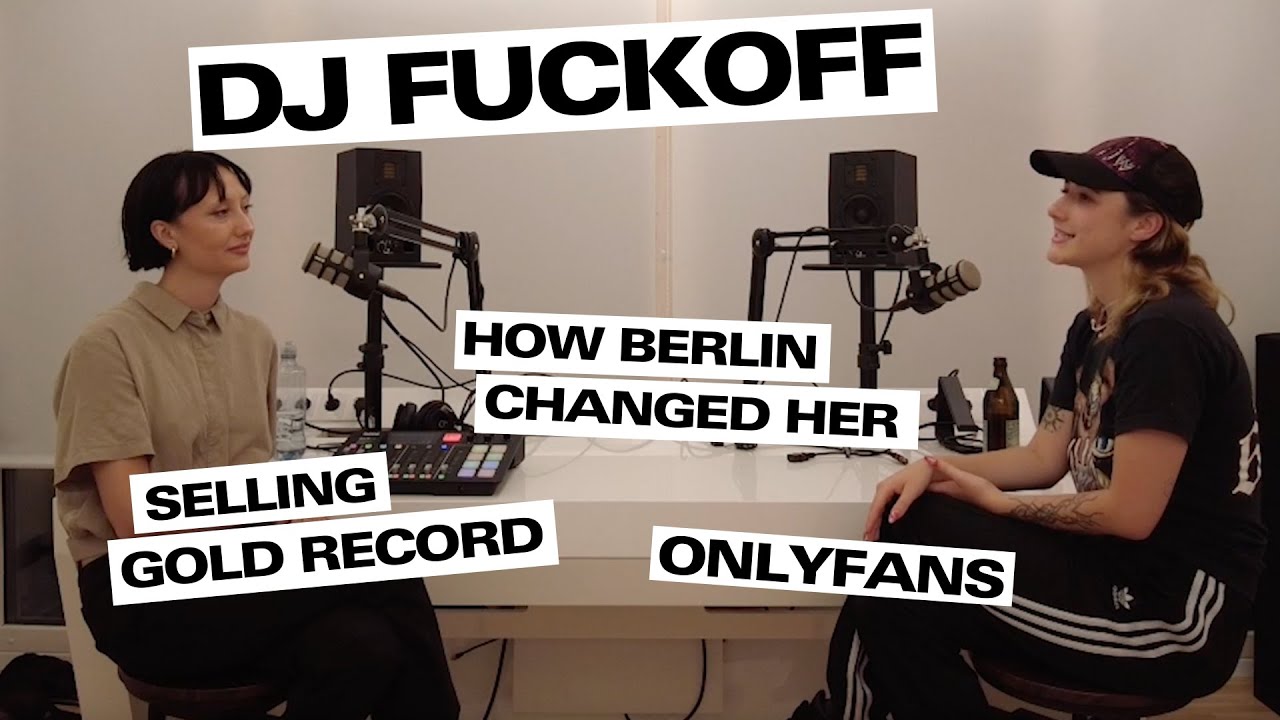
- DJ Fuckoff: The pop career that turned into a techno sensation – and why she loves Berlin
DJ Fuckoff: From Pop Stardom to Techno Mayhem – The Untamed Rise of Berlin’s Wildest DJ Some artists follow the industry’s rulebook. DJ Fuckoff set it on fire and danced on the ashes. From going Gold as a pop star to throwing it all away for raw, underground techno, DJ Fuckoff’s journey is anything but predictable. In this episode of Playful Podcast, we dive deep into the chaos—her SoundCloud takeover, why OnlyFans makes sense for her brand, how Berlin lets her be 100% unapologetic, and the wild story of how Fuckoff was born. If you thought you knew DJ Fuckoff, think again. From Pop Star to SoundCloud Rebel Most people would kill for a Gold record. DJ Fuckoff? She walked away from it. Before she became one of the most talked-about DJs in Berlin’s underground, she was a pop artist on the rise. But something about the polished, commercial world of pop didn’t sit right. Instead of playing the industry’s game, she chose DIY chaos—dropping music on SoundCloud and building a cult following on her own terms. Fast-forward, and her high-energy, rave-ready tracks have made her a techno sensation. Why DJ Fuckoff Loves Berlin – And Why It Loves Her Back Berlin isn’t just a city—it’s an attitude. Zero judgment, zero boundaries, just pure self-expression. And for DJ Fuckoff, it’s the first place she’s felt truly free. No need to tone it down. No need to explain herself. Whether it’s her music, her OnlyFans, or her attitude, Berlin lets her exist without compromise. And in a world obsessed with labels and fitting in, that kind of acceptance hits different. Yes, She’s on OnlyFans – And It’s Not Just About Money Some people gasp when they find out DJ Fuckoff is on OnlyFans. But for her, it’s not some big statement—it just makes sense. In an industry where artists are constantly being exploited, she’s taking control of her own image, her own content, and her own revenue. It’s DIY, it’s direct, and it’s exactly the kind of business move that aligns with her whole career ethos: do what you want, and don’t let anyone tell you otherwise. Married, Raving, and Thriving Turns out, she’s married—something most fans don’t know. But just like everything else in her life, it’s on her own terms. Love, music, career—none of it follows the traditional script. And that’s what makes DJ Fuckoff one of the most exciting, unpredictable names in electronic music today. Who the F*ck Is DJ Fuckoff? Find Out Here Her name says it all—she’s here to break rules, shake up the scene, and remind everyone that music is meant to be fun, raw, and real. Follow Playful Magazine & Podcast – @playful.mag Follow DJ Fuckoff – @djfuckoff69 SEO Keywords DJ Fuckoff interview, DJ Fuckoff SoundCloud, DJ Fuckoff OnlyFans, Berlin underground techno, Female DJs in Berlin, DIY music industry, How to make it as a DJ, Berlin electronic music scene, Techno culture Berlin, SoundCloud techno artists, Unfiltered DJ interviews, DJ career transition, DJ Fuckoff biography, Women in techno music, Berlin club scene Become a Patreon , get access to extra material, pre-releases and amazing perks as free merch: