


How To Last Longer In Bed: The Endurance Blueprint for the Playful Modern Man
Updated: Feb 26
Sex isn't (preferably) a 100-meter sprint. It's a high-stakes endurance set: long, sweaty, and if you tap out before the main event, you've fundamentally misunderstood the assignment. But let's be honest: premature ejaculation isn't a moral failing. It's just bad wiring, fixable with some mechanical updates and a bit of nervous system recalibration.

If you're lasting about as long as a techno intro before the kick drum even hits, you're not broken. You're just undertrained. So let's talk endurance, the unglamorous, physiological kind that doesn't involve protein shakes or motivational Instagram quotes.
The Mechanical Hack: Stop-Start & The Squeeze
Your body has a point of no return. Scientifically, it's called the "ejaculatory inevitability threshold", the moment when your sympathetic nervous system takes the wheel and you become a passenger in your own orgasm. The trick is learning to recognize it before you cross it.
Enter the stop-start technique: as soon as you feel the buildup approaching the edge, you pause everything. Wait. Let the arousal level drop back down to about a six or seven out of ten. Then resume. Rinse, repeat. It's not sexy in theory, but it works because you're literally training your nervous system to tolerate higher levels of arousal without triggering the autonomic reflex that ends the show.

The squeeze technique is the stop-start's grittier cousin. When you feel yourself approaching climax, you (or your partner) apply firm pressure to the head of the penis, specifically, the spot where the shaft meets the glans. Hold for a few seconds until the urge subsides. According to research published in the Journal of Sexual Medicine, this method has been clinically effective in delaying ejaculation by interrupting the reflex arc before it completes (source). It's DIY behavioral therapy for your dick.
Both techniques require patience and a partner who doesn't mind the occasional timeout. But they work because they rewire the feedback loop between arousal and ejaculation. You're not suppressing anything, you're just teaching your body that the peak isn't a cliff.
Pelvic Floor Power: Kegels Aren't Just for Girls
Here's something no one tells teenage boys: you have a pelvic floor, and it controls more than just your ability to not piss yourself during a coughing fit. The pubococcygeus (PC) muscle is the hidden infrastructure of ejaculatory control. Stronger PC muscle = longer staying power. It's that simple.
Kegels for men work the same way they do for women. Locate the muscle by stopping your pee mid-stream (just once, for identification purposes, don't make this a habit). Once you've found it, squeeze and hold for 5–10 seconds, then release. Do this 10–15 times, three times a day. Gradually increase duration and reps.
A 2019 study in the Therapeutic Advances in Urology found that pelvic floor muscle training significantly improved ejaculatory latency time in men with premature ejaculation (source). Translation: stronger floor = more control over your exit strategy. Think of it as CrossFit for your crotch, minus the cult.
The Natural Pharmacy: Ashwagandha and Ginseng
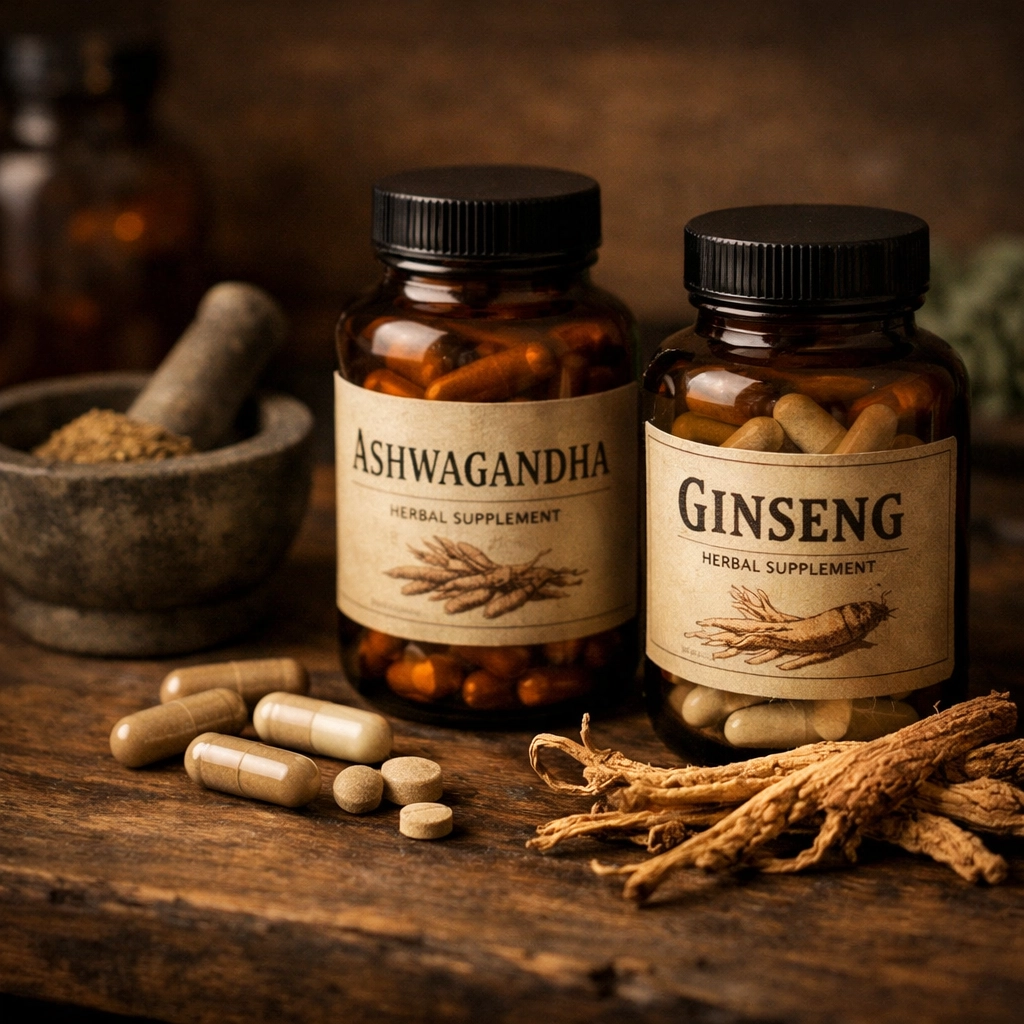
Skip the blue pills for a second and look at the adaptogens gathering dust in your local health food store. Ashwagandha and Ginseng aren't magic bullets, but they're worth the cynicism tax.
Ashwagandha (is said to) work by lowering cortisol, the stress hormone that's often the silent assassin of sexual endurance. When you're anxious (about performance, about finishing too early, about literally anything), cortisol floods your system and your sympathetic nervous system goes haywire. According to recent research in Cureus, Ashwagandha supplementation has been shown to reduce stress and improve sexual function in men (source).

Ginseng, shall meanwhile, improves blood flow and energy without the pharmaceutical side effects. It's not going to turn you into a porn star, but it might buy you an extra few minutes, and honestly, that's often all you need.
Dosage matters. For Ashwagandha, aim for 300–500 mg daily. For Ginseng, 200–400 mg of standardized extract. Give it a few weeks to build up in your system. This isn't cocaine; it's preventative maintenance.
The Head Game: Performance Anxiety is a Cycle
Let's talk about the feedback loop from hell: you worry about finishing too early, so your nervous system tenses up, your cortisol spikes, and you finish even earlier. Then the cycle repeats, except now you've got a nice layer of shame to work through as well.
Why does performance anxiety kill endurance?
Because your body can't tell the difference between being chased by a bear and being terrified of disappointing your partner. Both trigger the sympathetic "fight or flight" response, which shortens the fuse on your ejaculatory reflex. Your brain is literally treating sex like a threat.
The fix isn't "just relax" (useless advice). It's reframing the situation. Stop treating sex like a performance review. If you need a mental reset, try this: sex isn't something you do to someone; it's something you do with them. The pressure drops the second you stop thinking of yourself as the sole entertainer.
Also, communicate. If you're spiraling mid-session, say something. Pause. Adjust. Most partners would rather have a 20-minute session with breaks than a two-minute disaster followed by awkward silence. Check out the Kink Sheet if you need a roadmap for a more BDSM leaning in that conversation.
Kinky Control: Edging as Brain Training
If you're even remotely kink-adjacent, you've probably heard of edging, the practice of getting as close to orgasm as possible, then backing off, repeatedly, until you finally let yourself finish. It's both a technique and a kink, depending on how you frame it.
From a training perspective, edging teaches your brain and body to hover at the peak without tipping over. You're building tolerance for high arousal. You're also teaching yourself to recognize the exact moment before the point of no return, which makes applying the stop-start or squeeze techniques in partnered sex much easier.
From a kink perspective, it's a power play, either over yourself (self-control as dominance) or with a partner (orgasm denial as submission). Either way, it's effective endurance training disguised as foreplay.
Want to take this further? Explore positions that naturally slow things down, check out How to Be a Freak (in bed) for ideas that prioritize control over speed.
Positions, Prep, and Other Hacks
Positions matter.
Some are sprint-paced (doggy, missionary with deep thrusting), others are marathon-friendly. Spooning, for example, limits depth and movement, which dials down the intensity. Cowgirl lets your partner control the speed and depth, taking the pressure off you.
Masturbate 1–2 hours before sex.
It's the oldest trick in the book because it works. You're lowering baseline sensitivity without killing your drive. Timing is key, too soon and you risk losing your erection; too close and it won't make a difference.
Thicker condoms or numbing agents can also help.
Desensitizing gels or condoms with benzocaine reduce sensitivity just enough to extend your session. It's not cheating; it's adaptive equipment.
And if you're looking for high-performance recovery hacks, don't sleep on including your Balls, testicular massage improves blood flow and relaxation, which indirectly supports endurance.
FAQs: The Questions You're Googling at 2 AM
How long should sex actually last?
Depends who you ask. The average penetrative sex session is 11 minutes, according to most studies (some say 5-7 but you don't want to aim for that). Anything over three minutes is clinically "normal." But normal doesn't mean ideal, it just means you're not an outlier.
Can edging make you last longer permanently?
Yes, but it takes consistent practice. Edging is nervous system training. The more you do it, the better you get at recognizing and controlling arousal thresholds. It's cumulative.
Do Kegels really work, or is it bro science?
They work. Pelvic floor exercises are backed by peer-reviewed research. It's not instant, but after 4–6 weeks of consistent practice, most men report noticeable improvement in ejaculatory control.

