


What Is Sub Drop in BDSM? Why You Can Feel Emotionally Low After an Intense Scene
Sub drop in BDSM is a low or unsettled feeling that some people experience after an intense scene. It can feel emotional, physical, or both. You might feel sad, anxious, unusually sensitive, tired, irritable, or simply unlike yourself. It can arrive soon after a scene, or later, when you thought you were already back to normal.

It does not happen to everyone. It is not a diagnosis. And it does not automatically mean that the scene was wrong.
That last point can be hard to remember when you are lying awake the next evening, replaying a moment that felt intimate and thrilling at the time. A person can have wanted the scene, enjoyed it, and still feel low afterward. Human reactions are rarely tidy enough to respect a timeline.
The meaning of sub drop
“Sub drop” is a community term for a difficult emotional or physical comedown after an intense BDSM scene, usually described by the submissive or bottom. People use it for different experiences, which is part of why the term can sound more precise than it really is.
For one person, sub drop means a sudden wave of sadness on the way home. For another, it is a flat, foggy day a little later. Some people feel embarrassed or exposed. Others feel lonely, unsettled, or too tired to answer messages. There is no single emotional pattern that defines it.
The word “drop” suggests a fall from one distinct high. Sometimes that is exactly how it feels. Sometimes it is less dramatic: ordinary life resumes, and your mood is simply lower than you expected.
A low mood afterward does not cancel out the desire or pleasure you felt during the scene. Both can be true. You can value the experience and still need time to understand how it landed.
When can sub drop happen?
Sub drop after a scene may begin during the immediate comedown, later that evening, or the next day. Some people describe it arriving several days afterward. The timing varies, and there is no reliable clock you can use to predict it.
That delayed arrival can make the feeling confusing. You may have left the scene feeling calm, even buoyant. Then Monday arrives, along with emails, grocery shopping and the strange administrative burden of being a person. The contrast can feel sharper than expected.
In their 2016 paper “Black and Blues: Sub Drop, Top Drop, Event Drop and Scene Drop,” Richard A. Sprott and Anna Randall describe both immediate and delayed forms of “drop.” They note that people report emotional changes hours or days later, sometimes up to a week afterward. Their article is an exploratory discussion, not a clinical study measuring how often sub drop happens or establishing exactly why.
There is also no rule that you must experience it. Some people feel tired but emotionally fine. Some feel tender for a while. Others notice very little change. None of those responses is the correct one.
Why might you feel low after a BDSM scene?
The honest answer is that researchers do not yet know enough to give one settled explanation for sub drop.
It is tempting to say that your endorphins or adrenaline “crash” after a scene. That explanation is repeated often, but it turns a complicated experience into a neat chemical story. Sprott and Randall specifically caution that the biological explanations commonly offered for immediate drop have not been tested directly. They also argue that a delayed emotional drop needs more than a quick hormone explanation.

A separate small study by Sagarin and colleagues looked at hormonal changes during consensual sadomasochistic activity. It found changes in cortisol during scenes for participants receiving stimulation or following orders. It did not establish that a hormone change causes sub drop. The study helps show that bodies can respond to scenes; it does not give us a formula for what someone will feel afterward.
The emotional context matters, too. A scene can ask a lot of your attention, your body and your sense of self. When it ends, the intensity is gone, while the memory remains. You might be processing vulnerability, a powerful sense of connection, or the sudden return to a very different everyday role. Or you may simply be exhausted. Sometimes a low mood has several causes at once, which is less satisfying than one cause and more believable.
Sub drop is not the same thing as subspace, either. People often use subspace to describe an altered or absorbed state during a scene. Sub drop refers to a difficult feeling afterward. They can occur in the same person, but one does not guarantee the other. Our article about subspace explores that different experience.
What does sub drop feel like?
There is no universal checklist, but people commonly use the phrase for feelings such as:
Sadness, anxiety, irritability or unexpected tears.
Feeling exposed, embarrassed, disconnected or unusually needy.
Low energy, mental fog, or a sense that ordinary tasks take more effort.
Wanting reassurance or company, or wanting quiet instead.
The feeling may be mild and pass on its own. It may also be difficult to name. “I’m not sure what’s wrong; I just feel off” is a perfectly useful description. You do not need to produce an elegant emotional report while you are in the middle of it.
It is also worth being precise about what the label can and cannot do. Calling a feeling sub drop may help you talk about it. It cannot tell you, by itself, whether a scene was safe, whether a boundary was crossed, or whether a separate health concern needs attention.
What can help when sub drop arrives?
Start with the least glamorous possibility: you may be depleted. Food, water, warmth and sleep do not explain every emotional low, but they are sensible basics when your body feels wrung out. A message to someone you trust can help, too, especially if what you need is simply to be heard, not analysed.
If it feels manageable, give the feeling a little room before turning it into a verdict on yourself or the scene. You might write down what you remember: what felt good, what felt complicated, and what you would want to discuss later. Not as homework. More as a way of keeping a passing mood from rewriting the whole experience.
If you have a scene partner, tell them what you are noticing in plain language. “I feel low today and could use a check-in” is enough. You do not need to prove that the feeling is serious before you are allowed to ask for care.
Aftercare can offer reassurance and practical support, but it is not a guaranteed way to prevent sub drop. My separate guide to BDSM aftercare and the days following a session covers that broader subject. Here, the point is simpler: support may help you feel less alone with the drop, even when nobody can promise it will vanish on schedule.
When is it more than a drop?
A short-lived low mood after an intense experience is not automatically a sign that something is wrong. But “sub drop” should not become a reason to dismiss serious distress.
If the feeling is severe, keeps worsening, lasts in a way that disrupts daily life, or comes with thoughts of self-harm, seek support from a qualified health professional. And if what you are experiencing connects to coercion, a consent violation, injury, or fear of another person, treat that as its own concern, not as an ordinary comedown to be explained away.
There is no prize for enduring it quietly.
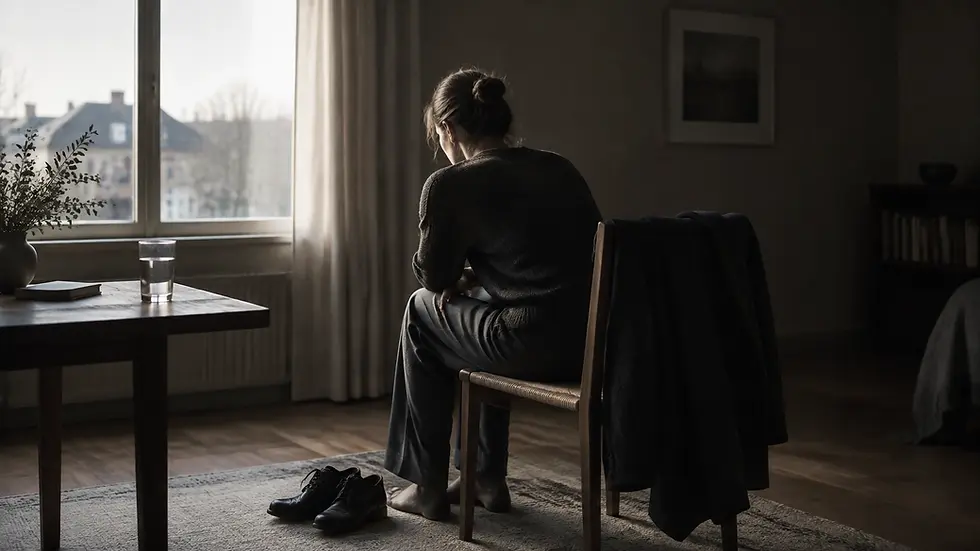
A feeling, not a verdict
Sub drop is a name for something people report after BDSM: feeling emotionally low, unsettled or depleted after an intense scene. It may arrive soon afterward or days later. Its causes are not fully understood, and the research remains limited.
You can be glad you explored something and still feel tender afterward. You can need reassurance without regretting the scene. You can also decide, once you have had time to reflect, that something needs to change next time. None of those responses has to be settled in the first hour.
Sometimes the useful answer is not a grand theory. It is a glass of water, a little honesty, and permission not to interpret your whole life before breakfast.
By Amanda Sandström
References: Sprott, R. A., & Randall, A. (2016). “Black and Blues: Sub Drop, Top Drop, Event Drop and Scene Drop”, Journal of Positive Sexuality, 2(3), 53–61. Sagarin, B. J., et al. (2009). “Hormonal Changes and Couple Bonding in Consensual Sadomasochistic Activity”, Archives of Sexual Behavior, 38, 186–200.

