


Why We Like It: The Science and Psychology of Getting Slapped
You've been asked "why do you like that?" at least once. Maybe by a concerned friend, a bewildered hookup, or your own brain at 3 AM. Why does getting slapped, choked, tied up, or told what to do feel so goddamn good when, logically, it shouldn't?

Here's the thing: your brain doesn't care about logic. It cares about chemicals. And when you understand the cocktail of neuroscience, psychology, and primal wiring behind kink, suddenly the whole thing makes a lot more sense than missionary with the lights off.
Your Brain on Pain: The Endorphin Factory
Let's start with the obvious: pain hurts. That's literally its job. But here's where it gets interesting, your brain can't always tell the difference between "bad pain" and "good pain." It just knows something intense is happening and floods your system with endorphins to cope.
Endorphins are your body's natural opioids. Same chemical family as morphine. When you get slapped (consensually, with intent, by someone you trust), your brain goes, "Oh shit, emergency!" and dumps feel-good chemicals into your bloodstream. The result? A rush that feels less like injury and more like the best runner's high you've never earned.

This is why impact play, spanking, slapping, flogging, can feel euphoric instead of traumatic. Context matters. Your nervous system reads the situation: Am I safe? Do I want this? Is there trust here? If the answer is yes, it processes the sensation as pleasure, not threat.
Rule of Thumb: Pain without consent or trust = trauma. Pain with consent, communication, and aftercare = the good stuff. Your brain knows the difference even when your vanilla friends don't.
The Power Exchange: Why Control is the Ultimate Drug
Beyond the physical, there's something deeper going on. BDSM is, at its core, about power, who has it, who gives it up, and what happens in that exchange.
For submissives, surrendering control can feel like finally putting down a weight you didn't know you were carrying. In a world that demands you make 10,000 decisions a day, handing over the reins to someone you trust is psychologically cathartic. You don't have to think. You just have to be.
For dominants, the flip side is equally intoxicating. Taking responsibility for someone's pleasure, pain, and safety requires presence, skill, and emotional intelligence. It's not about being a bully, it's about being trusted enough to lead.
This dynamic shows up everywhere in kink, from female-led relationships to feminization and gender play. The costumes change; the psychological engine stays the same.
Subspace and Top-Drop: The Chemical Hangover
Ever heard someone describe "subspace" like it's a religious experience? That's because, neurologically, it kind of is.
Subspace is what happens when endorphins, adrenaline, and dopamine stack up during intense play. The submissive enters an altered state, floaty, detached, sometimes nonverbal. It's the brain's way of saying, "We've left the building."
But what goes up must come down. After the scene ends and those chemicals drain, some people experience "drop", a crash that can feel like sadness, exhaustion, or emotional rawness. This isn't failure; it's biology.
Dominants get it too. "Top-drop" is real, and it hits when the adrenaline of running a scene fades and you're left wondering if you did everything right, if your partner is okay, if you're a monster for enjoying that. (You're not. You're just human.)
Do:
Plan for aftercare before the scene starts
Have water, snacks, blankets, and time for cuddling or quiet
Check in the next day, drop can be delayed
Don't:
Assume everyone drops the same way (or at all)
Skip aftercare because "it wasn't that intense"
Panic if you feel weird 48 hours later, it's normal
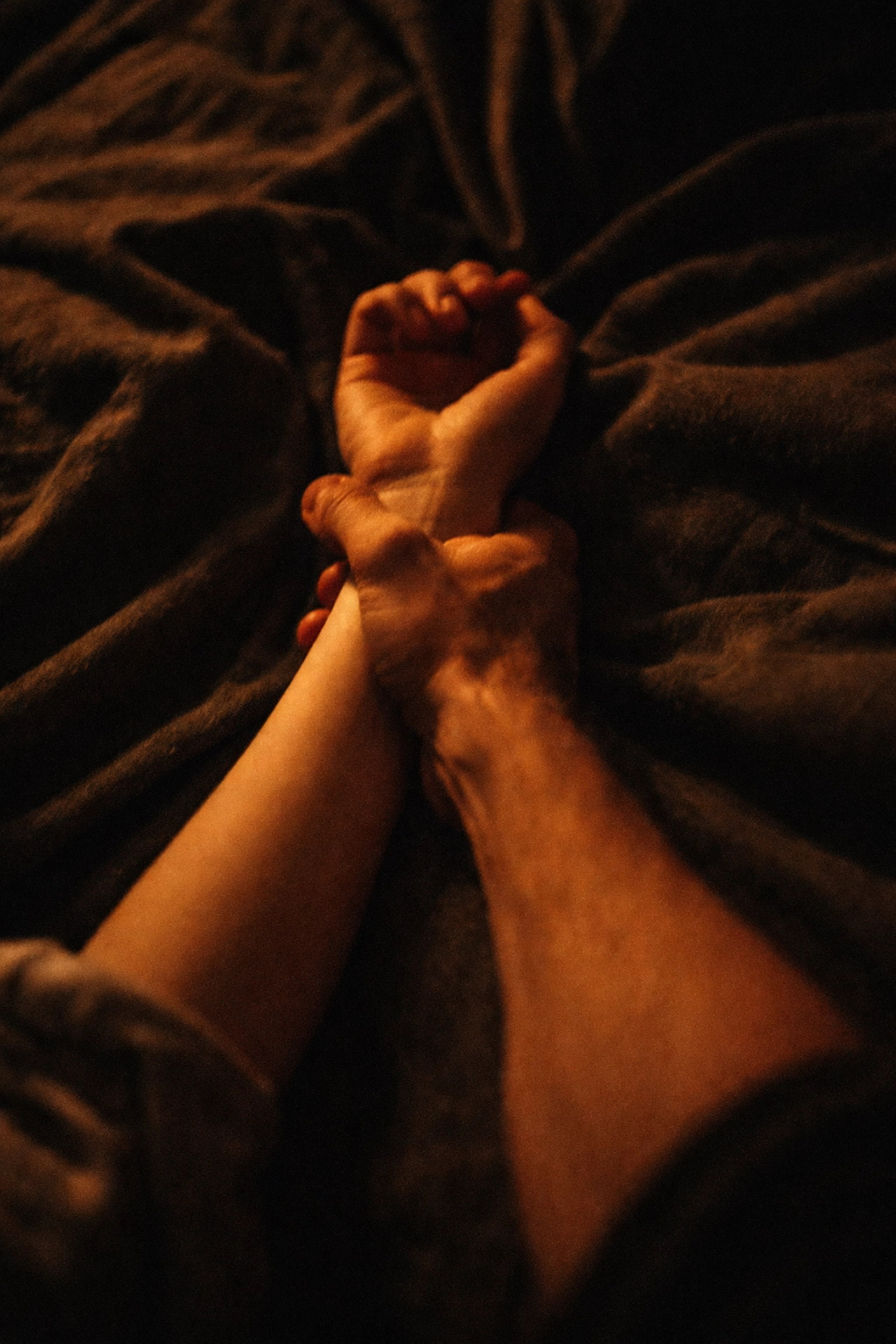
The Neurospicy Connection: Why ADHD Brains Love Structure
Here's something the vanilla world doesn't talk about enough: a disproportionate number of neurodivergent people find their way to kink. And it's not random.
For ADHD brains starved of dopamine, the intensity of BDSM is like finally finding the right frequency. The heightened sensations, the clear rules, the immediate feedback, it all cuts through the noise in a way that "normal" sex often can't.
Autistic folks often report that the explicit negotiation and structure of kink feels safer than the unspoken rules of vanilla intimacy. When everything is discussed beforehand, what's allowed, what's off-limits, what the safewords are, there's no guessing game. No social scripts to decode mid-act.
The ritual of BDSM (negotiate, scene, aftercare) provides a framework that many neurospicy brains find genuinely soothing. It's not about being broken; it's about finding what actually works for your wiring.
Why "Normal" Sex Feels Flat: A Mildly Cynical Take
Let's be honest: once you've tasted the full sensory buffet, plain toast doesn't hit the same.
Vanilla sex isn't bad. It's fine. But for a lot of people, it operates on such a narrow bandwidth that it starts to feel... muted. Like watching a movie with the volume at 20% and the color saturation dialed down.
Kink engages more of you, your body, your mind, your emotions, your trust, your fear, your creativity. It demands presence in a way that half-asleep missionary simply doesn't. And once your nervous system learns that sex can be a full-body, full-brain experience, going back to the basics can feel like a downgrade.

This isn't about being "too damaged" for normal intimacy. It's about knowing what you actually want and refusing to settle for less.
So, Why Do People Like BDSM?
Because it works. Because our brains are wired for intensity, trust, and controlled risk. Because power exchange is psychologically cathartic. Because pain and pleasure share the same neural pathways when the context is right.
And because, sometimes, getting slapped by someone you trust feels like the most honest form of intimacy there is.
FAQ: The Stuff People Actually Google
Is it normal to like being hit during sex? Yes. Completely. As long as it's consensual and you're not causing lasting harm, your preferences are valid. Millions of people are into impact play, you're in good (if bruised) company.
Does liking BDSM mean I have trauma? Not necessarily. Some people come to kink through trauma processing, but plenty of well-adjusted humans just like intense sensation. Correlation isn't causation, and kink isn't a diagnosis.
Why do I feel sad after a really good scene? That's drop. Your brain just spent all its happy chemicals, and now it needs to restock. Aftercare, hydration, rest, and patience will get you through it.
Can BDSM actually be good for mental health? For many people, yes. The communication skills, the trust-building, the embodied presence: it's therapeutic in ways that vanilla intimacy often isn't. Just don't use it as a replacement for actual therapy if you need it.
How do I explain this to a partner who doesn't get it? Start with the "why," not the "what." Talk about trust, intensity, connection. Send them this article. If they're still horrified, you might just be incompatible: and that's okay.


