


11 BDSM Games for the Bored, the Brave, and the Slightly Deranged
So you've mastered the basics. You've got your kink sheet filled out, your safe words memorized, and your leather harness fits like a second skin. But something's missing. The scripts are getting stale. The same scenes on repeat. You're craving something that makes your pulse spike in a way that Netflix and flogging can't quite deliver anymore.

Welcome to the next level: where BDSM stops being a checklist and starts feeling like actual psychological warfare (the consensual kind, obviously). These aren't your beginner's "tie me up and spank me" games. These are the mind-fucks, the endurance tests, the scenarios that blur the line between pain and transcendence until you can't remember which one you signed up for.
1. Punishment Roulette: Leave It to Fate
Here's how it works: Write down 12 punishments on folded paper: ranging from "bratty but bearable" (30 minutes in the corner, nose to the wall) to "genuinely terrifying" (full electro session, cold shower bondage, or a public walk on a leash). Put them in a bowl. When the sub breaks a rule, they draw.
The psychological kick? The sub doesn't know what they're getting. Neither does the Dom until the paper unfolds. That uncertainty: the loss of control on both sides: creates a different kind of tension than negotiated scenes. It strips away performance and leaves raw reaction.
Pro tip: Include one "get out of jail free" card in the mix. The relief when they draw it? Chef's kiss.
2. Sensory Deprivation Poker: Bet Your Senses
You need: A deck of cards, a blindfold, noise-canceling headphones, a gag, leather cuffs, and someone you trust not to fuck with you too hard (or maybe someone you do want to fuck with you).
Each hand of poker corresponds to a sense removed for 20 minutes. Lose once? Sight goes. Lose twice? Add hearing. By the third loss, you're gagged, bound, and floating in a void where time doesn't exist and every touch feels like fire.
The psychology here is simple: Sensory deprivation forces the brain into overdrive. When you strip input, the nervous system amplifies everything left. A feather feels like a whip. A whisper sounds like a scream. You're not just playing cards: you're gambling with your perception of reality.
What's the Difference Between a Scene and a Game?
Scenes are normally scripted. Games have variables. In a scene, you know where you're headed: maybe not every detail, but the arc is clear. Games introduce chaos. They force both players to adapt in real-time, which is where the most interesting power dynamics happen. You stop performing and start reacting.

3. The Endurance Test: How Long Until You Break?
This one's brutal in its simplicity. The sub kneels. Hands behind their back (cuffed or not). A weight: could be a book, a tray, a dildo: balanced on their head or outstretched palms. Every time it falls, they get punished. The Dom watches, does nothing, and enjoys the slow unraveling.
The twist? The Dom introduces distractions. A vibrator. Dirty talk. Ice cubes dragged down the spine. The sub's job is to stay still. Spoiler: They won't.
This game exposes the lie that submission is passive. It's not. It's an active, agonizing choice made again and again until the body gives out.
4. Simon Says: Dominance Edition
Remember the childhood game? Same rules, darker stakes. "Simon says strip." "Simon says crawl to me." "Simon says hold this position for five minutes without moving."
But here's the catch: any command not prefaced with "Simon says" is a trap. Follow it anyway, and you're punished. The Dom is testing obedience, sure, but also attention, self-control, and the ability to override instinct.
The mindfuck? After 30 minutes of following orders, the sub's brain is wired to obey. Breaking that pattern: stopping mid-crawl because "Simon" didn't say: requires more willpower than most people expect.
5. Object of Desire: Dehumanization as Devotion
For one hour, the sub isn't a person. They're furniture. A footstool. A coat rack. A table holding drinks while the Dom scrolls through their phone, ignoring them completely.
Why does this work? Because objectification in consensual BDSM contexts taps into ego-death: the surrender of self. It's not degradation for the sake of cruelty. It's permission to stop performing humanity for a while. To exist without expectation, without thought, without the exhausting burden of being you.
The Dom's job? Treat them like an object until the sub mentally lets go. Then, without warning, bring them back with a touch, a kiss, a "good boy" whispered low. The whiplash between nothing and everything is the point.
6. Fear Play Russian Roulette
Six tasks written on slips of paper. Five are manageable: wax play, breath control, impact play with a paddle. One is the sub's hard limit. They draw one at random.
The rule? They don't look at it first. The Dom reads it. If it's the hard limit, the Dom stops, and they negotiate something else on the spot. If it's not, the scene continues.
This game isn't about actually violating consent: it's about the fear of it. That split second before the Dom reads the paper, when the sub's brain floods with adrenaline and cortisol, is the high. It mimics the body's stress response to real danger, except you're safe. That's the addiction.
How Do You Keep BDSM Games from Feeling Repetitive?
Rotate power. The same game hits different when roles switch or when the sub suddenly gets to make one decision per round (which toy, which punishment, how long). Predictability kills kink faster than bad lube. Surprise is the skeleton key.

7. Predicament Bondage Challenges
The sub is bound in a position that's just barely sustainable: on tiptoes with hands overhead, or balancing on their knees with a spreader bar. The predicament? If they lower their heels, nipple clamps tighten. If they drop their arms, a vibrator turns off. Pleasure and pain in a zero-sum game.
The Dom doesn't touch them. Doesn't need to. The sub is fighting their own body, their own limits, with no one to blame but themselves. That's the erosion of control in its purest form.
8. The Silent Treatment Game
For 24 hours, the sub isn't allowed to speak unless given explicit permission. They communicate through gestures, eye contact, or written notes. Meanwhile, the Dom continues life as normal: conversations, phone calls, everything: while the sub exists in silence beside them.
Why does this wreck people? Because speech is power. It's agency. It's proof you exist in someone else's world. Take it away, and the sub becomes a ghost. Some find it meditative. Others find it maddening. Both are valid.
9. Pain Tolerance Ladder
The Dom creates a "ladder" of sensations: 10 levels, from a light slap to a heavy cane strike. The sub climbs it, rung by rung, stopping when they hit their limit. No pressure to reach the top. No shame in stopping at level three.
The beauty of this game is that it removes performance anxiety. The goal isn't to be "tough" or impress anyone. It's pure data collection. Where does your body tap out? And maybe, next time, can you push one rung higher?
10. Subspace Scavenger Hunt
Before the scene, the Dom hides six items around the space: a collar, a plug, a flogger, lube, a blindfold, and one "wildcard." The sub, already deep in subspace from a warmup session, has to crawl and find each one. Every item they retrieve determines the next part of the scene.
The disorientation of subspace makes even simple tasks feel impossible. Time dilates. Instructions slip through your brain like water. You're a passenger in your own body, and the Dom is rewiring the route in real time.
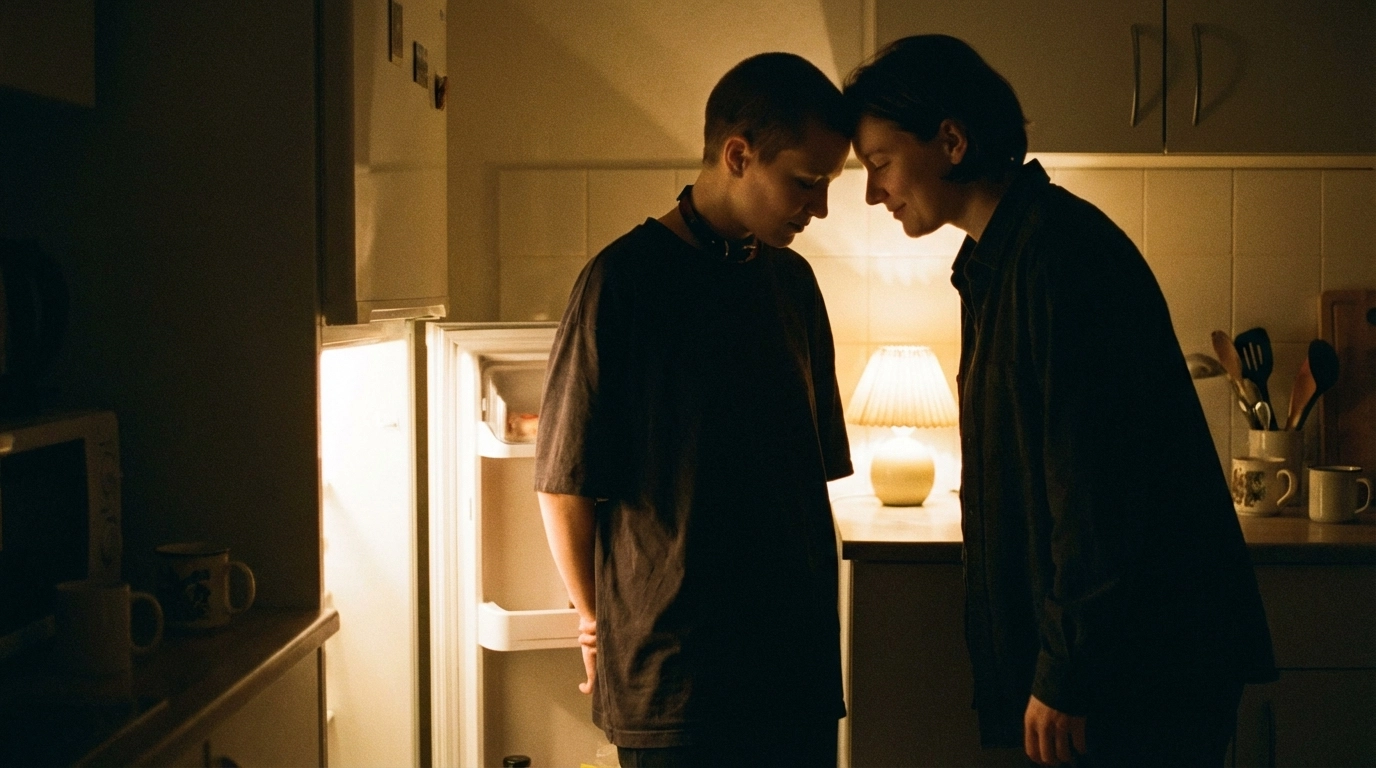
11. Orgasm Control Dice
Two dice. One controls when the sub is allowed to touch themselves (multiples of 2 minutes). The other controls how (slow, fast, with a toy, no hands). The Dom rolls. The sub obeys. If they come without permission, they're locked in chastity or denied orgasms for a week.
Simple. Infuriating. Effective.
The psychology of orgasm control: edging, denial, forced orgasms: is rooted in anticipation and reward systems. You're hacking dopamine pathways, turning climax into something you have to earn, to wait for, to beg for. When it finally happens, the release is biblical.
Why Do We Need "Games" in BDSM at All?
Because routine is the enemy of intensity. When you know every beat of a scene, your nervous system stops reacting. Games introduce variables: chance, stakes, real-time adaptation: that keep you sharp. They force presence. They strip away the performance and leave only instinct.
Also, let's be honest: They're fun...
And if you're in– or looking to visit Berlin and want to see some of this in action, check out the city's underground BDSM scene: where theory meets sweat-soaked practice at 4 a.m. in a basement you won't find on Google Maps.

