


Medical Gloves Fetish (Latex/ Nitrile): Why Your Brain Short-Circuits for That Snap
Updated: Mar 17
The first time your nervous system learned “gloves mean something...” it probably wasn’t sexy.
It was maybe fluorescent light. The sharp, clean sting of antiseptic in the back of your throat. That minty chemical rinse that pretends it’s kindness. The high-pitched eeee of the drill that hits a frequency your body still recognizes as threat, even when you’re grown.

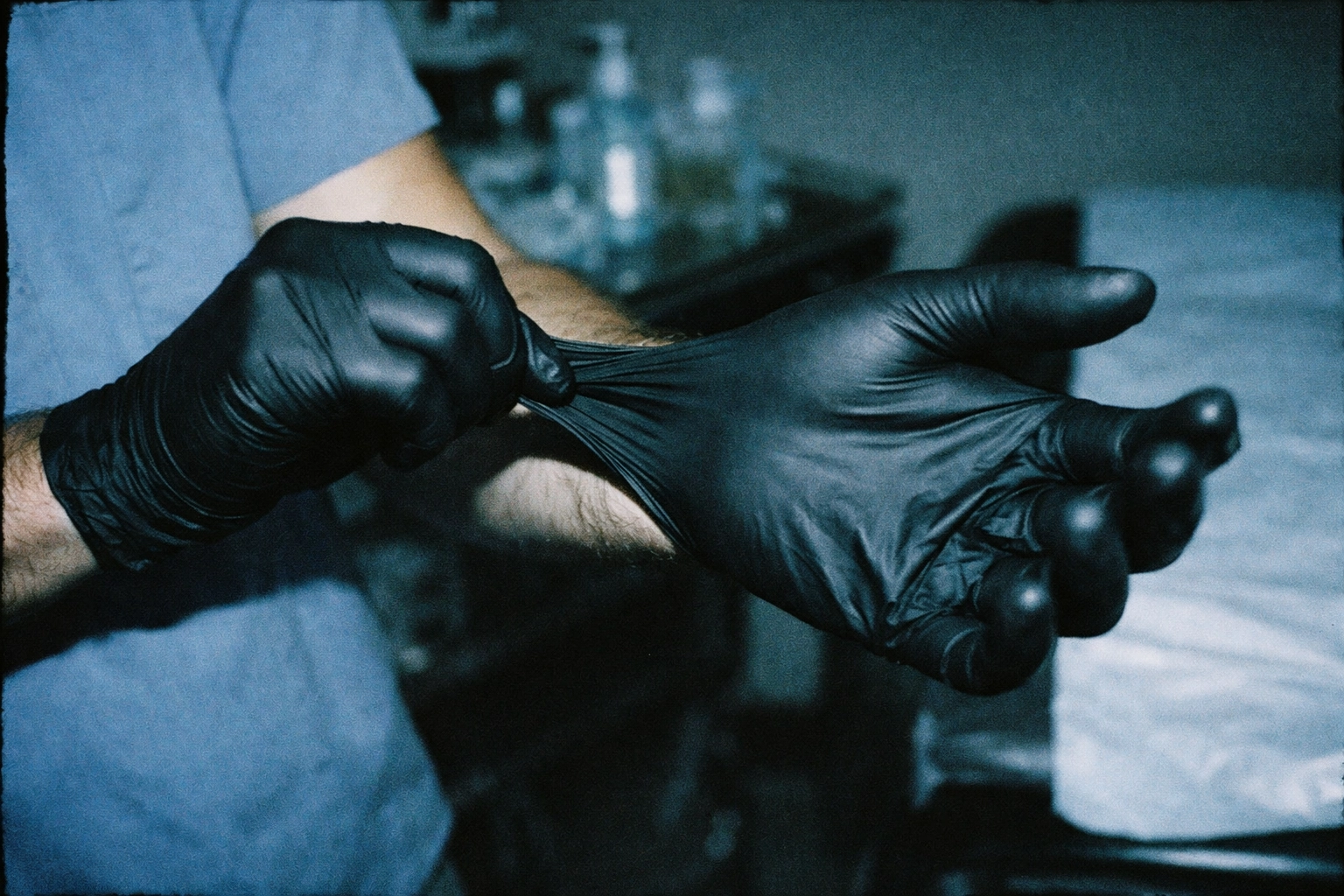
And then the ritual: the professional pulls on medical latex gloves, and you watch the material stretch tight over knuckles like a uniform snapping into place. You hear it. That elastic snap at the wrist. It’s small, but it lands like a gavel: I’m in control now. You’re going to stay still. Something is about to happen inside your mouth.
That’s the seed for a lot of adult glove fetish. Not “doctors are hot,” but procedural power—sterile authority + controlled access to your body. A gloved hand doesn’t feel like skin-to-skin comfort. It feels like a tool with permission. It edits out warmth, makes touch more deliberate, and turns intimacy into something you can’t quite argue with.
If you crave gloves in BDSM, you’re usually craving the barrier itself: the friction, the heat trap, the slick glide, the psychological distance. The fact that someone can be careful and invasive at the same time. The fact that sterile can feel like dominance.
This piece stays in the playroom. No scene tourism—just the fetish mechanics: why the brain craves the barrier, what nitrile gloves actually do to sensation, the “doctor” dynamic (protocol, exposure, inspection), and partner-play tips that keep it hot instead of goofy.
Latex: Second Skin, Heat Prison
Latex is a second skin that doesn’t negotiate. It clings, grips, releases—controlled friction that makes even a “gentle” stroke feel like a decision. And it traps your heat until you start breathing differently, because your hand is basically sealed into its own sweaty little climate.
In a scene, you learn fast that latex doesn’t breathe. That’s part of the kink. Your skin warms the rubber, the rubber warms your skin, and the scent rises up like a cue your body understands. You’re not just wearing latex. You’re marinating in it.
And yeah: if you use latex, don’t be cute with the wrong lube. Oil-based stuff eats it. Keep it water or silicone unless you enjoy surprise failures mid-scene.
Nitrile: The Clinical Other
Nitrile is the clinical other—the black or midnight blue barrier that makes a touch feel like an invasive, deliberate calculation. Less stretch, more discipline. It doesn’t melt onto you; it stays itself, like it’s reminding you this isn’t intimacy, it’s intent.
When nitrile is wet (sweat, lube, whatever’s on the menu), it becomes slick and surgical—glide, stop, hold. Manufactured control.
If your scene involves thicker silicone lubes (or anything that would make latex fail at the worst moment), nitrile handles it better. It’s built for messy play and BDSM for high performers who don’t want their gear to tap out before they do.
Why Your Brain Craves the Barrier: Procedure, Power, Permission
A lot of glove fetish isn’t about “medical” at all—it’s about controlled contact.
A glove does four things that brains (especially anxious, kinky, high-control brains) respond to fast:
It changes the sensory math. Less skin-to-skin warmth, more focused texture. Every stroke feels more decided.
It turns touch into a procedure. Pressure, placement, pause. The same hand suddenly feels trained.
It creates permission through distance. Some people can receive “invasive” touch (throat, mouth, genitals, inside the body) more easily when there’s a barrier. Not less intimate—just less overwhelming.
It signals authority. The glove reads like preparedness. Competence. Clean intent. For submissives, that can land as safety. For dominants, it can feel like stepping into role.
And there’s also the unsexy truth: gloves are practical harm reduction. Clean hands. Less bacterial transfer. Fewer micro-tears when you’re using lube and doing internal play. It’s not a lecture—it’s how you keep a hot scene from turning into a preventable problem.
A Couples Guide: How to Introduce the Snap
If you’re the one with the glove itch but your partner hears “PPE” and thinks “kitchen sink,” don’t force a whole medical drama on a Tuesday. Make it feel like a private experiment you’re both slightly nervous to admit you want.
The Wet Nitrile Moment: Keep a box of black nitrile by the bed. Next time you’re already kissing, slide them on slowly. Add a little lube before you touch them there—wet nitrile is a different animal: glossy, slick, unapologetic. Then give them one controlled stroke somewhere non-threatening (inner wrist, collarbone, the back of the neck) and pause. Let them register the texture.
The Snap as a Signal: Don’t over-talk it. Snap the cuff against your own wrist once. Or against theirs if that’s agreed. It’s a sharp little punctuation mark that says: we’re not doing normal anymore. If it lands, you’ll feel it in their breathing.
The “Yes/No/Maybe” Reality Check: If you want to take it further, use the Yes/No/Maybe manifesto. Gloves can be playful, but they can also bring up medical triggers, control stuff, shame stuff. This keeps it hot and honest.
Make It a Prop With Rules: Gloves work best when they mean something. Try: “When the gloves go on, you stop negotiating with words—nods and safe words only.” Or: “Gloves mean inspection.” Or: “Gloves mean service.” Pick one rule, keep it simple, and let the ritual do the heavy lifting.

Role Dynamics: “Doctor” vs “Dominance” (Same Tools, Different Energy)
Medical gloves sit right on the border between care and control, which is why they’re so reliable in BDSM. You can steer the entire emotional tone of a scene just by deciding what the glove means.
1) The “Doctor” Dynamic (Sterile Authority) This is protocol kink. The glove says: I’m prepared, I’m protected, I’m in charge of the process.
The submissive isn’t being “touched,” they’re being handled.
Language gets formal. Instructions get clean. Consent gets structured.
Exposure becomes a controlled event: “open,” “hold,” “breathe,” “stay.”
It’s hot because it externalizes power. The dominant doesn’t have to be angry or loud. The glove does the intimidation quietly.
2) The “Dominance” Dynamic (Possession With a Barrier) Same glove, different intention: not sterile, but deliberate.
The glove becomes a filter: less tenderness, more inevitability.
Touch can be affectionate and still feel like ownership because the warmth is muted.
The barrier makes it easier to do slow, repetitive sensation without sliding into “cuddly.”
If you’re playing with humiliation, gloves can add that extra layer of “you don’t even get my skin.” If you’re playing with devotion/service, gloves can read as “I’m taking care of you properly.”
If you want to layer this with negotiation in a way that stays sexy, the Yes/No/Maybe manifesto is still the cleanest tool I know.
Practical Partner Play: Glove Scenes That Actually Work
The 3-Minute Barrier Test (for first-timers)
Put on one glove only.
Use a tiny amount of lube on the glove.
Touch one neutral zone (inner wrist, back of neck, thigh) with one slow stroke, then stop.
Ask: “More pressure, or less?” That’s it. No speeches.
Inspection Sequence (soft power, high effect)
Gloves on = talking stops unless it’s consent, safewords, or check-ins.
Start with “present hands,” then “present throat,” then “present mouth.”
Keep it procedural: position, hold, release. The rhythm is the kink.
Wet Nitrile Control (slippery + clinical)
Wet nitrile is glidey, detached, and a little unreal.
Great for teasing edges: slow circles, stop-start, a firm hold that doesn’t feel “warm.”
Works especially well for people who like sensation without emotional flooding.
Latex Heat Trap (cling + scent)
Latex warms up and grips. Use it for friction and pressure play.
Use water-based or silicone lube (never oil-based on latex).
Build a “heat” arc: start light, let the glove warm, then increase pressure once it starts to cling.
Internal Play Without the Awkwardness (the grown-up reason)
Gloves + lube + trimmed nails = fewer scratches, less bacteria transfer, fewer “my body is irritated for three days” stories.
If you’re doing anal play, use a fresh glove and change gloves when switching holes. Yes, it’s logistics. It’s also how you keep it hot and safe.
FAQ (Because People Actually Google This)
Is a medical glove fetish a real fetish? Yes. Some people love the look, but most are responding to what the glove does: barrier, authority, altered texture, and the ritual of “prep.”
What’s better for a glove fetish: nitrile or latex? Latex is clingy, warm, high-friction, and scented—more “second skin.” Nitrile is firmer, more clinical, and more compatible with a wider range of lubes—more “tool.”
Why does the snap of a glove feel so intense? Because it’s an audible cue that a role is starting. Your brain loves rituals. The snap is a tiny start gun.
No Amateur Hour: Fit + Hygiene
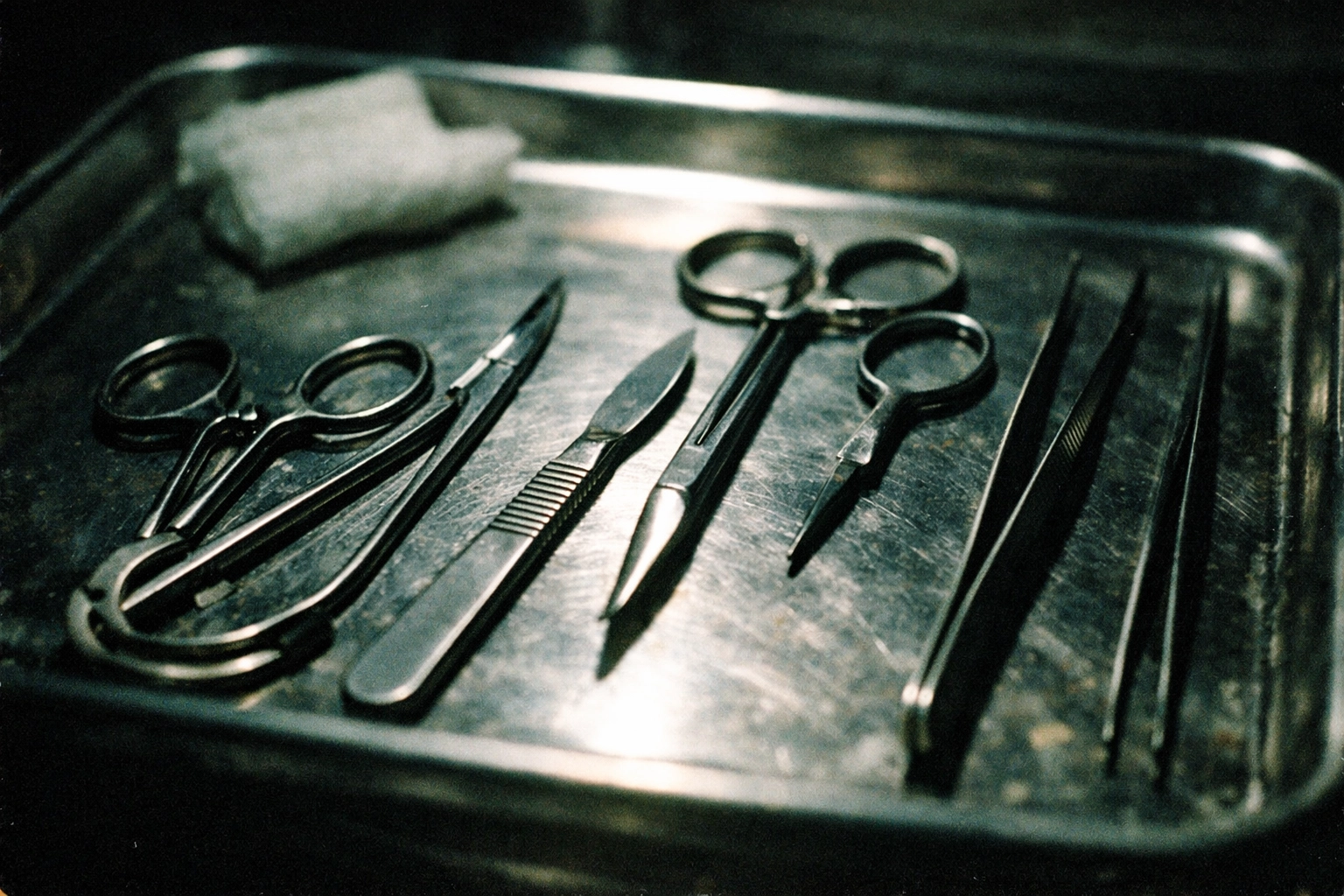
A baggy glove isn’t “casual.” It’s a failure of intent. If it’s not a second skin, you’re basically wearing trash bags and calling it kink. Wrinkles at the fingertips broadcast hesitation. Extra rubber flapping around makes every touch feel accidental, and accidental is the opposite of deliberate.
Go snug. No bunching. No air pockets. No clown-hand silhouette.
And keep it unpowdered. Powder turns everything into dusty nonsense, can irritate mucous membranes, and ruins the whole clean/dirty paradox that makes glove fetish hot in the first place. Gloves are part of harm reduction here—especially for internal play—because they lower the risk of micro-tears and reduce bacterial transfer. It’s not a PSA, it’s just how you keep the night from getting stupid.

Closing: The Safety of the Barrier
At the end of the day, the obsession with latex and nitrile is about the tension between safety and danger. The glove is a literal safety barrier, protecting us from germs and fluids. But psychologically, it represents the danger of the unknown: the "procedure" that is about to happen, the authority of the wearer, and the surrender of the subject.
Whether you’re building a formal medical roleplay scene or just want touch to feel more deliberate, gloves are an instant switch. They make hands feel less like “skin” and more like intention—and for a lot of nervous systems, that’s the safest way to go feral.
By: Amanda Sandström

